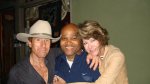
Luellen Smiley is a creative nonfiction writer, author, columnist, and historian whose writing is deeply rooted in a controversial personal history. She is the daughter of Allen Smiley, a close friend, associate, and business partner of notorious Las Vegas gangster Benjamin “Bugsy” Siegel. Her father was sitting only feet from Siegel when Siegel was murdered in Beverly Hills on June 20, 1947.
That extraordinary childhood history became the foundation for Smiley’s first book, Cradle of Crime: A Daughter’s Tribute, published in 2017. The memoir explores what it was like to grow up as the daughter of a man connected to organized crime while trying to reconcile her love for her father with the secrecy, fear, and criminal world surrounding him.
Smiley’s work has appeared in publications including the New York Post, MORE Magazine, Southern California newspapers, and Authorlink. She wrote the newspaper column Smiley’s Dice—Adventures in Livingness, which earned a Blue-Ribbon Award from the California Newspapers Association for her Growing Up With Gangsters columns.
Her interest in her father’s history also led her to become a researcher and commentator on organized crime history. She has participated in television, radio, and documentary interviews.
Smiley’s next book, Gaslighting Greta, will be published this year. A personal story that reads like fiction. Her own website describes the project as exploring a woman whose life is destabilized by gaslighting and psychological manipulation.
Her writing career reflects a recurring theme: using personal experience and research to uncover the truth behind complicated relationships and extraordinary lives. From the secretive world surrounding her father and Bugsy Siegel to the deeply personal territory of Gaslighting Greta, Smiley’s work transforms difficult experiences into stories of survival, discovery, and ultimately reclaiming one’s voice.
Luellen Smiley is an author whose life has given her an unusual perspective on secrecy, manipulation, family loyalty, betrayal, and survival—and she uses that perspective as the raw material for her nonfiction storytelling.
I’ve written in the genre of Creative Nonfiction, integrating the events through dialogue, journal entries, and a third-person narrative. Within three locations, Santa Fe, New Mexico, Los Angeles, California, and Saratoga Springs, NY. Greta (me) exposes the mutilation gaslighting abuse inflicts on her emotions, psychology, mental and physical health, and her finances.
SCREENPLAY: My Hoodlum Saint is the story of a woman whose survival is wedged between love and fear of her father. It exposes my struggle to survive adolescence while growing up in my father’s secret and terrifying world, where only family could be trusted.
For more information contact me: folliesls@aol.com
I’ve written in the genre of Creative Nonfiction, integrating the events through dialogue, journal entries, and a third-person narrative. Within three locations, Santa Fe, New Mexico, Los Angeles, California, and Saratoga Springs, NY. Greta (me) exposes the mutilation gaslighting abuse inflicts on her emotions, psychology, mental and physical health, and her finances.
I’ve written in the genre of Creative Nonfiction, integrating the events through dialogue, journal entries, and a third-person narrative. Within three locations, Santa Fe, New Mexico, Los Angeles, California, and Saratoga Springs, NY. Greta (me) exposes the mutilation gaslighting abuse inflicts on her emotions, psychology, mental and physical health, and her finances.
On Sunday afternoon, while I was sitting in the bridal room at Neiman Marcus, I was in a head on collision with the past and the present. I was not in the bridal room to buy a wedding dress; I was there to store my mink coat. While I waited for a sales clerk, I imagined myself in the chic trench coat with diamond buttons hanging from the rack. If I did have to choose a bridal gown, it would have to be something unconventional, like my mother chose. She wore navy blue taffeta to her wedding. If I did get married, I would have to save my coins for a long time to pay for the reception. Where would I get married? At one time, I dreamt of the Bel Air Hotel, but that was in the 1970s. With inflation, the wedding would cost no less than $100,000 today. By the time, I saved that much, I would be 100 years old! Besides the hotel is not the same. The last time I dropped by, I was chased out of the river walk for taking photographs of the swans. Just before my father took ill in 1982, he told me my wedding would be at the Flamingo in Las Vegas. I remember it, as if it was yesterday. We were walking together in Holmby Park, where he walked his five miles everyday. Very often, he stopped at the public phone booth and made a few calls. He whispered so I could not hear his conversation. I know now he was laying his bets for the day. I waited on the green lawn watching the older men and women playing Croquette. When my father returned from the phone booth, he looked perturbed. That meant he lost money on that day’s sporting event. We walked a long time in heavy silence until he decided to break it.
“You know, I’m very proud of you.” He said looking straight ahead.
“You are?” I was stunned.
“Of course I am! I hope you don’t think any different. I have not said it often, because I’m coaching you all the time, so you will be independent, and know how to look after yourself, after I’m gone. I don’t want you to fall into a rut with the wrong fellow, like so many women. It can ruin your whole life.”
“But I haven’t accomplished anything really great…. like you.”
“What the hell are you talking about!” he stopped in the middle of the path. “I made more mistakes than you ever could. Are you kidding sweetheart, I broke all the rules, and made some new ones, and I’ve paid. Like I’ve always said, you make your bed, and you lie in it. I’m proud of the career you made in real estate, without any help from me. Now you have to concentrate on the right fellow. When you do get around to finding the right one, we’ll have the wedding at the Flamingo.
“The Flamingo? Do you still know people there?” I asked timidly.
“Of course, I was a major stockholder … at one time.” Then he cleared his throat, and I wondered if he was choking on the memories. “That’s where Mommy and I had our wedding reception.” I thought of the photographs of Mommy cutting the white cake. It was the first time he ever mentioned my wedding. It was the first time, he seemed to say, okay find a fellow, and I’ll let you go. I sensed his detachment from everything around us except for me.
“I would like that. How long has it been since you were there?”
“I didn’t want to set foot in that place after Benny… (Benjamin Siegel) I didn’t care if the whole place burnt to the ground. There’s no reason why you can’t have your wedding there. I can still arrange a few things.”
The vision of father, my future husband, and me was an aberration without incident or purpose at that age. However, he was dreaming that the day would come soon. When the sales clerk finally appeared, I was glazed over, in some marbled state of melancholy, clutching the mink coat on my lap. The mink is the oldest garment in my closet. My father gave it to me in 1978.
It’s as if it happened yesterday. My father called one Saturday and asked me to meet him at Mannis Furs in Beverly Hills. When I arrived, my father was seated in a chair, facing a three-way mirror. Manny rushed over to greet me. “This is my daughter, Luellen, “Manny bowed and kissed my hand. In the other hand, he was holding a mink jacket. “Try it on for size,” my father ordered. I hesitated, and looked at him for explanation. It never occurred to me I would be trying on mink coats. He was always asking me to meet him in shops, and restaurants. He held meetings wherever he knew people, so I assumed he had a meeting with Manny.
“Go on—try it on. I didn’t say I was buying it, I just want to see what it looks like.” Manny tucked me into the mink coat, and pulled the waist sash through. He stroked the fur up and down, and then I did the same. The coat was solid, like a cloth wall that buried my body in warmth. I stood before the mirror and watched the transformation.
“Turn around, “my father ordered. I took a few steps in a half circle and slipped my hands into the pockets, and turned around slowly as I’d seen my mother do. Suddenly his eyes welled up with tears and he took out his handkerchief.
“If you dressed in a proper outfit and not those silly jeans all the time, you might look like something!” he barked.
“Well I didn’t know I’d be trying on minks today.”
“What the hell did you think you’d be trying on, pianos? For crying out loud! “I don’t know what you’re thinking sometimes. Take it off.” Manny untied the sash and took the coat. My father was in a mood, it was my fault again. I shouldn’t have worn jeans. Why did he start crying? Manny disappeared, and my father stood in front of the mirror to affirm his reflection. After he took off in his Cadillac, I stood in front of Manny’s and looked at the mink coats. He never mentioned it again, but I knew the coat was going to show up one day. Six or seven months after that first meeting at Mannis, the mink appeared at Chanukah.
“Daddy, this is so extravagant, I won’t have any where to wear it.”
“Oh yes you will! Just wait and see. If you quit going out with those misfits and find yourself a decent fella you’ll have numerous occasions. That’s the reason why I gave it to you, so don’t misuse it!”
When I left Neiman’s I was drenched in his memory. The mink coat has outlived all of my possessions. Every time I put it on, I’m reminded of his wisdom. It’s not the expense or signature status. When I put it on, I feel transformed. I discovered the bill of sale from Manny’s, and the balance due, after my father died. I called Manny and asked him for more time, to pay it off. He told me to forget about it, my father had brought in so much business to the store.
Last year I called Manny to see if I could have the coat remade into a vest; as the sleeves were too short. ” It’ll cost you the same as the mink,” he told me. I had the holes repaired, and the coat glazed and will pack it in the suitcase for the trip to New York, now thrity two years later with a decent fella.
I’ve written in the genre of Creative Nonfiction, integrating the events through dialogue, journal entries, and a third-person narrative. Within three locations, Santa Fe, New Mexico, Los Angeles, California, and Saratoga Springs, NY. Greta (me) exposes the mutilation gaslighting abuse inflicts on her emotions, psychology, mental and physical health, and her finances.
JIM MARSHALL AT THE OPENING OF GALLERY LOULOU TAOS. 2006
“Americas ‘true romantics will be the jazz musicians and jazz writers, living by their lyrical emotions, senses.”
From The Diary of Anais Nin volume Six.”
The throw of the dice this week lands on mysteries of character. We all have our closet of masks that we reach for when we need to camouflage our fear, insecurity, disdain, or judgment.
I wore a mask the day I went to pick up Jim Marshall at the Albuquerque airport. I didn’t want to appear unprepared, inexperienced, or effusive. As soon as I recognized Jim taking his last step off the escalator, my mask cracked. I ran to him, hugged him, and clichés poured out of my mouth: I’m so happy to see you, how was the flight, welcome to New Mexico. He nodded, smiled with closed lips, and asked,
“How long does it take to get to Taos?”
“An hour and a half.” Jim’s lips tightened.
In the car, Rudy and I whisked up conversation, but the results were drippy. Jim stared out at the window. We were in the valley of lunar like scrub rush, broken down sheds, and absentee human life.
“WHERE THE FUCK ARE WE?” Jim growled
“We’re almost there, another half-hour.”
“WHERE THE FUCK ARE THE PEOPLE?”
I tried, unsuccessfully to assure Jim, there were lots of people in Taos. I read his mind; why did he make the decision to exhibit his iconic rock and roll photography in a gallery in boon-dust Taos. How much longer before he can unwind with a scotch, and call home for a taste of civility. Who are these morons driving this car anyway?
Inside the B & B suite we’d rented for Jim, I breezed across to the adobe terrace, and opened the curtains, “You like it?”
“THERE’S NO FUCKING HAIR DRYER?”
“You can borrow mine.”
“Are you hungry Jim?”
“No.”
“I have a bottle of your favorite scotch.” He picked it up, and looked for a glass. I ran to the bathroom and brought him a glass.
“See you tomorrow. “ He growled.
“What time?”
“I’ll call.”
The next day, I waited for Jim’s call. Instead I heard from Dave Brolan, Jim’s operator to the world; friend, translator, mediator and stabilizer.
“Dave, is Jim all right?”
“He’ll be all right. He’s tired and cranky. He’ll be fine tomorrow night.
“What can I do anything?”
“No, just take care of your opening business. I take care of Jim.”
I sighed deeply, and returned to the chaotic events preceding the grand opening of our gallery. Jim agreed to exhibit along with Baron Wolman and Michael Zagaris, because they hadn’t been together in a long time. I was about to ease-drop on history, with three distinguished rock and roll photographers.
My heart raced ahead of me, until 6 o’clock when Jim and Dave walked into the gallery.
“How are you Jim?” I followed behind him as he viewed the exhibition.
“Looks good.” He said. Then he was swallowed up into a crowd of guests. He stood patiently for photographs, greeted strangers with a boyish smile and brotherly handshake. He sat down at my desk and began to sign books for a tickly line of buyers. I filled his glass with scotch and he said, “Thanks sweetheart.” My heart returned to my chest. The evening transcended into a kinetic overture of rock n roll music, reminiscing of the sixties, and feverish excitement. Around midnight, after being the center of 250 to 300 Taosaneos, Jim said, “Let’s eat.” It was snowing and pitch black outside.
Our party of seven charged in and rearranged the vibe of the banal atmosphere. Once inside the dining room Michael Z, was exhibiting impersonations of Jim, while we all laughed. Marshall didn’t twitch, or sneer; he accepted being the force of raucous laughter.
A young professional looking man approached our table.
“I apologize for interrupting. When I got to the opening, you all were leaving. I’m really sorry I missed it; I’m a huge fan of your work Jim.
“How did you know we were here? I interrupted.
“I followed you.” He said.
“Join us.”
That night and the next three nights, Jim was host to a crowd of fans that followed him around. I watched the mystery of his character, revealed, untouched, in focus, on what the photographs brought back to him. He was anointed by their admiration, without becoming inflated.
At the airport, Jim took me into his arms, “You did good LouLou.”
Two Years later.
I am in Santa Fe, and my social life is Camus strange. While I try to sell my photographs and write, my life is stifled by the absence of friends and parties. Jim called one afternoon.
“Loulou, my friends just moved to Santa Fe. Take down their number and call them.”
I called these new friends of Jim’s, and a week later, a man drove up, and leaped out of his car.
“Hi LouLou, I’m Jock.” He sat down, but his spirit was an unbolted kinetic burst of energy.
“I brought this for you.” He handed me a beautifully hand crafted book of his Cuban Series photographs.
A month or so later, I received a party invitation from Jock and his wife, Annaliese. The evening was lyrical, as friends circulated between the portals, while Jock mixed molita’s and Annaliese served Cuban food. That night, I was introduced to their friends. Now, a year later, I consider them my friends.
I called Jim after the party.
“I called to thank you.”
“What for baby?”
“For introducing me to Jock and Annaliese. Now I have friends.” Jim chuckled.
Jim passed away March 23, 2010. He was a romantic and lived by lyrical emotions and senses.
I’ve written in the genre of Creative Nonfiction, integrating the events through dialogue, journal entries, and a third-person narrative. Within three locations, Santa Fe, New Mexico, Los Angeles, California, and Saratoga Springs, NY. Greta (me) exposes the mutilation gaslighting abuse inflicts on her emotions, psychology, mental and physical health, and her finances.
San Diego was still into rage and rock and roll. The people I was calling for gigs didn’t know Hip-Hop yet. That was too bad, because we were having the greatestexperience of our life. When I ran out of money I took a job managing a condominium project, where I lived rent free and had weekends and evenings for Jammers. After a time of observing their self expression, I asked myself, where is mine? I still refused to get on stage, Vince used to bawl me out because I made Piper introduce the group. We were good for each other, the three of us. After two years Piper moved to Los Angeles to launch his career, he had showmanship in the way he held his hands. Vince took over the troupe and added twelve more dancers. These two young men, they were the sparklers in my life, like that star you think you’ll never hold. When I left the Jammers I was a different woman. They put the rhythm back in my spirit, and faith into my soul. I mean there are things a business career will never offer, you have to go into the arts for this kind of stuff.
I’ve written in the genre of Creative Nonfiction, integrating the events through dialogue, journal entries, and a third-person narrative. Within three locations, Santa Fe, New Mexico, Los Angeles, California, and Saratoga Springs, NY. Greta (me) exposes the mutilation gaslighting abuse inflicts on her emotions, psychology, mental and physical health, and her finances.
Free yourmind and the rest will follow, the words from EnVogue’s latest release became a sort of mantra.
It was a decision that came at a moment when everything else stopped making sense, except my happiness. I tossed out the two-piece suits, and turned off the world outside. Insulated in my tiny North Park bungalow, I merged into music and dance. During the hottest of summer days I was seated cross legged on the worn carpeting watching MTV and flipping through magazines.
Imploded with music videos, magazines, and dancing; Hip-Hop was the most exhilarating choreography around. I watched the music videos over and over. When I searched the yellow pages for dance classes; no one was offering Hip-Hop. With that, I thought why can’t I be the founder of a dance troupe?
I needed to find the dancers to suit my concept of integrating jazz funk, hip-hop, and Afro-Cuban into a collage workshop.
Piper Jo was the first dancer to join. He came at me with everything he had; talent, faith, intelligence, and belief in this crazy white chick who wanted to hip-hop. Piper played Miles Davis, emulated jazz-funk, and moved like Michael Jackson. He was twenty years old and this was his first teaching job. When I asked him who taught him to dance he answered;
“Michael Jackson and James Brown. I danced in my living room every day. My mother couldn’t get me out of the house. God blessed me with this gift, and I want to share it. So if you put me in your dance troupe I guarantee, you won’t be sorry. NO, you won’t.”
At our first audition Piper said, “How you expect to pick dancers, if you don’t know what to look for. I swear Lue, you are crazy. But don’t worry, I’ll show you. And don’t be picking every guy out there cause he can Hip-Hop, there’s nothing to that. We want dancers with classical training.” He was right.
“Vince Master Jam” was a former break-dancer and studied classical dance. Vince was the coolest; he sat back and waited for his chance, unhurried, relaxed, but when the music came on, he flipped everyone out. He was thirty. Both of them belonged to the no smoking, no drinking, no drugs, group
At that first audition I wanted to select half of the thirty some dancers that showed up. They came dressed in street clothes, wearing scarves and bandannas. I watched them leap, kick, split and turn inside out for the job. I knew that I was in the right spot. Then we added Monique, a startling beauty with Afro-Cuban dance training, and a perpetual attitude of carefreeness.
For the first few months, the Jammers taught classes under a leaky roof, on a tiled floor, without any heat. Piper rode a bus from the other side of town to get to the building. Vince drove an hour each way to teach one class at night. The first few months no one showed up for Vince’s Hip-Hop class. But he kept coming back every week. When I apologized, he said, “ That’s okay Lue. We get it going on, they’ll show up soon– I’m sure.”
They did show up and we moved into a well positioned Health Club downtown San Diego. The classes filled up with students, dancers, and working women looking for a new challenge. They came from all different races; Asian, White, Hispanic and Black. I danced with the classes and promoted our troupe. They laughed at my attempt to be a soul sister, and I laughed with them. We were reviewed by KPBS magazine, and a photographer took photographs of us and featured the Jammers in the magazine. People began to think I knew what I was doing. The Jammers thought I could take them places. I pictured them on the front page of Variety, the problem was I was too early.
I’ve written in the genre of Creative Nonfiction, integrating the events through dialogue, journal entries, and a third-person narrative. Within three locations, Santa Fe, New Mexico, Los Angeles, California, and Saratoga Springs, NY. Greta (me) exposes the mutilation gaslighting abuse inflicts on her emotions, psychology, mental and physical health, and her finances.
I’ve written in the genre of Creative Nonfiction, integrating the events through dialogue, journal entries, and a third-person narrative. Within three locations, Santa Fe, New Mexico, Los Angeles, California, and Saratoga Springs, NY. Greta (me) exposes the mutilation gaslighting abuse inflicts on her emotions, psychology, mental and physical health, and her finances.
I’ve written in the genre of Creative Nonfiction, integrating the events through dialogue, journal entries, and a third-person narrative. Within three locations, Santa Fe, New Mexico, Los Angeles, California, and Saratoga Springs, NY. Greta (me) exposes the mutilation gaslighting abuse inflicts on her emotions, psychology, mental and physical health, and her finances.