Luellen Smiley is a creative nonfiction writer, author, columnist, and historian whose writing is deeply rooted in a controversial personal history. She is the daughter of Allen Smiley, a close friend, associate, and business partner of notorious Las Vegas gangster Benjamin “Bugsy” Siegel. Her father was sitting only feet from Siegel when Siegel was murdered in Beverly Hills on June 20, 1947.
That extraordinary childhood history became the foundation for Smiley’s first book, Cradle of Crime: A Daughter’s Tribute, published in 2017. The memoir explores what it was like to grow up as the daughter of a man connected to organized crime while trying to reconcile her love for her father with the secrecy, fear, and criminal world surrounding him.
Smiley’s work has appeared in publications including the New York Post, MORE Magazine, Southern California newspapers, and Authorlink. She wrote the newspaper column Smiley’s Dice—Adventures in Livingness, which earned a Blue-Ribbon Award from the California Newspapers Association for her Growing Up With Gangsters columns.
Her interest in her father’s history also led her to become a researcher and commentator on organized crime history. She has participated in television, radio, and documentary interviews.
Smiley’s next book, Gaslighting Greta, will be published this year. A personal story that reads like fiction. Her own website describes the project as exploring a woman whose life is destabilized by gaslighting and psychological manipulation.
Her writing career reflects a recurring theme: using personal experience and research to uncover the truth behind complicated relationships and extraordinary lives. From the secretive world surrounding her father and Bugsy Siegel to the deeply personal territory of Gaslighting Greta, Smiley’s work transforms difficult experiences into stories of survival, discovery, and ultimately reclaiming one’s voice.
Luellen Smiley is an author whose life has given her an unusual perspective on secrecy, manipulation, family loyalty, betrayal, and survival—and she uses that perspective as the raw material for her nonfiction storytelling.
Category: HISTORIC PRESERVATION, VICTORIAN RESTORATION, VICTORIAN HOMES
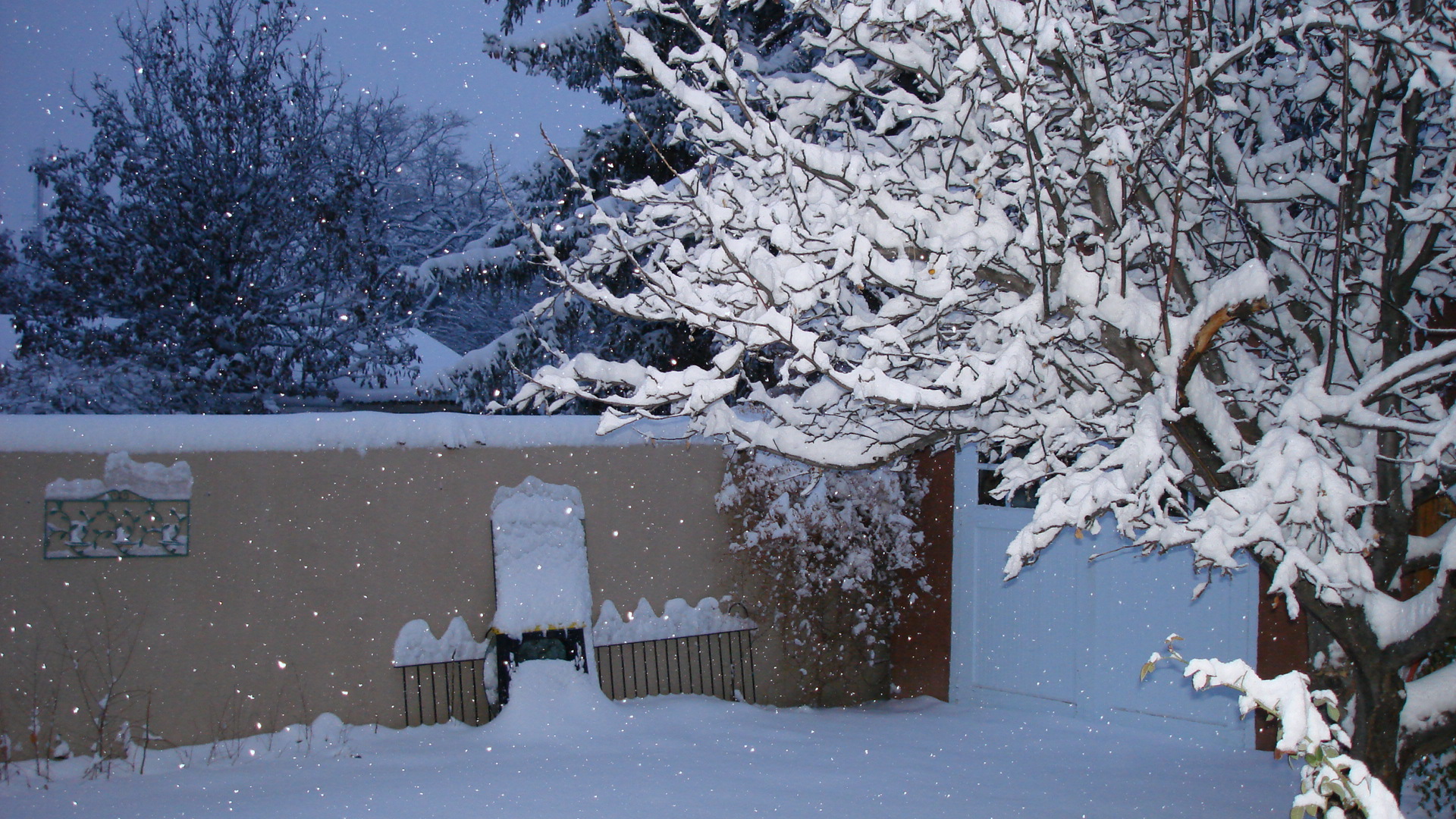
I shot this today with impetuous acceptance of more snow. I swept the stairs, removed branches, listened to music, and smiled. It will be my last winter in this quixotic, charming, historic village that taught me not to complain, instead to make it understandable.
I’ve written in the genre of Creative Nonfiction, integrating the events through dialogue, journal entries, and a third-person narrative. Within three locations, Santa Fe, New Mexico, Los Angeles, California, and Saratoga Springs, NY. Greta (me) exposes the mutilation gaslighting abuse inflicts on her emotions, psychology, mental and physical health, and her finances.
My Favorite home must be sold. After twenty-four years, Letting go is going slow, packing, and viewing my possessions and antiques. Today, I found a matchbook in perfect condition from the Stork Club, playbills, and musical sheets. I wish I hadn’t opened my steamer trunk; it’s like looking at another woman.
I’ve written in the genre of Creative Nonfiction, integrating the events through dialogue, journal entries, and a third-person narrative. Within three locations, Santa Fe, New Mexico, Los Angeles, California, and Saratoga Springs, NY. Greta (me) exposes the mutilation gaslighting abuse inflicts on her emotions, psychology, mental and physical health, and her finances.
SILHOUETTE of a Taos night out in 2006. It begins with the sunset—a bubble-gum pink sash that swirls like taffy just above the distant hillside. The transcending forms and colors in the sky distract me; they silence me, keeping me from turning on the television or answering the phone.
The sunset has settled into my routine. I watch it from the roof garden over our Adobe Home and Gallery every night. In the midst of dressing to attend an art auction at the Millicent Rogers Museum, the sun has vanished. The sky turns Taos blue; a luminous oil pigment canvas blue that appears like an endless tunnel you can walk through. As I descend the staircase and cross over the ménage of piles shoved in a corner to allow SC to paint, I think, “This is going to be my home. I’m still here” Adventures in Livingness
In the courtyard where new flagstone has been laid, and a mud ditch blocks the exit, Rudy hitches me on his back and carries me out the side entrance through Tony Abeyta’s yard. Tony’s yard is piled with sand from our flagstone project, and my high-heeled black suede shoes are not at all practical for crossing New Mexican dunes. This is how the evening begins. Out in the parking lot, we circle around once and stop in Robert’s gallery. He has offered me his turquoise squash seed necklace to wear at the auction. The necklace is from Turkey, and sells for $1,800. Millicent Rogers events always attract women with extravagant jewelry, and Robert knows I have no such possessions. He hands me the necklace and says, have fun.
At times like this, I can forget the faces and routines I lived in Solana Beach and feel swept into a labyrinth of unfamiliar vignettes. There are two police cars in the rear of the parking lot, the church looms like a fortress of wet mud, and SC is listening to The Band CD we picked up in Santa Fe. I slide into the car, ensuring my shoes don’t fill with gravel.
There is very little street light along the desert road, and cars approach you at disarming speeds. For newcomers, the pale yellow line that separates oncoming traffic, roaming animals, hitchhikers, leather-clad bikers, and abandoned pets is of no comfort or value. Boundaries and civilities between people are vague, and sometimes, conversations elope into poetry.
At the Millicent Rogers Museum, the director, Jill, who is there to welcome each guest, greets us at the carved wooden doors. This museum was once a home, like most museums in Taos.Each room is an envelope of Native American jewelry, ceramics, paintings, weaving, textiles, and metalwork sealed with Millicent Rogers’s ethereal presence. By coming to Taos and bridging her New York chic with southwestern individuality, she set global trends in fashion, art, and living. he museum collection includes some of her designs that evolved from her residency in the desert. She moved here in 1947 and died here in 1953. Although she could have chosen anywhere in the world to live, she settled in the unaltered, surreal lunar beauty of Taos.
I wandered through the tightly packed rooms, alternately viewing the guest’s attire and jewelry. The woven wraps, belts, and hats worn by men and women form a collage of individual expression. Almost everyone seems to attract attention by the texture and color of his or her attire. It is a festive traditional look, with southwestern accessories paired with jeans or silk dresses. If you come to Taos, look for a belt buckle, one piece of Native American jewelry, and one piece of art.
When the auction was announced, I admired the same etching as the woman next to me. She remarked that the artist was also the teacher of one of her children. I learned that Ellen had six children and 11 grandchildren. She was petite with curly blonde hair, and I liked her instantly. I told her I was a writer.
“So am I,” she answered.
Rather than talk about her work, she began talking about her daughter, who is also a writer.
“I’m so lucky–all my children and grandchildren are creative and artistic.”
It was obvious that her life was a garden of earthly delights and that she had raised many roses. When the auction began, she vanished, and I quickly viewed the art before returning to the two etchings. They were both sold.
As I was walking out, I bumped into Ellen. She was clutching the etchings.
“So, you bought them,” I said.
“Oh, yes, I had to have them.”
She left me with a beaming smile and a closing remark I often hear: “Welcome to Taos.”
I love hearing that so much I don’t want to stop saying, I just moved here. After the auction, we stopped in Marco’s Downtown Bistro, where we joined an improvisational party. It started when Marco introduced us to his friends, Pablo and Joan, who were visiting from Santa Fe.
The dim, glowing melon adobe walls of the bistro, Marco hugging everyone, Joan’s melodious, high-pitched laughter, Pablo telling jokes, Rudy laughing, and then Philip arriving to tell stories crossed over from strangers in a bistro to a fast-rolling film. The conversation and laughter surfed breathlessly from one person to another.
Joan remarked, “My fifteen minutes. This is the best for me. The first time you meet someone, you’re both talking without effort. It’s so perfect.”
We closed the bistro past midnight. Marco had gone home. Joan decided to stay at a friend’s house. Philip agreed to drive to Santa Fe the next day, and we took Tylenol before bed.
Not every night out in Taos is like Joan’s fifteen minutes, but chances are you will have something to write home about. The beginning of Gallery LouLou Taos, NM
OLYMPUS DIGITAL CAMERA
OLYMPUS DIGITAL CAMERA
OLYMPUS DIGITAL CAMERA
OLYMPUS DIGITAL CAMERAOLYMPUS DIGITAL CAMERAOLYMPUS DIGITAL CAMERA
I’ve written in the genre of Creative Nonfiction, integrating the events through dialogue, journal entries, and a third-person narrative. Within three locations, Santa Fe, New Mexico, Los Angeles, California, and Saratoga Springs, NY. Greta (me) exposes the mutilation gaslighting abuse inflicts on her emotions, psychology, mental and physical health, and her finances.
In the mood for pasta tonight, a few hits of green chili to flavor fest the marina, shrimp, garlic, and heaps of asiago cheese, yes sounds good. One step into the kitchen, and there on the electric stove burner is a mouse … I screamed, did you hear me? Then I stomped my feet and it lowered back into the passageway.
” I need emergency treatment, you won’t believe what I just saw,” The receptionist at Pest Control, replied, it sounded like she may be smiling.
” What?”
” A mouse found his way up to the stovetop grill, I mean not all the way, half his body was visible! ” She chuckled, for a full minute.
” I’m more afraid of mice than bears, foxes, or anything. I know it sounds irrational but I didn’t grow up here. “
” Well, let’s get you scheduled… let’s see now, we can get there on Thursday next week.”
” I cannot go in the kitchen..”
” Gee, I am sorry. I noticed that we were there in March of this year.”
“Yes, nine-hundred dollars here! You won’t charge me for this next visit.”
” Well, let me see what I can do.”
Enter, Gary, with a toolbox, and a howdy doody kind of introduction. He appeared as interested in ridding mice as I do shoveling snow. He’s going to retire soon, he says as he pokes around the kitchen, points to the openings, talks some more about retiring, and applies a bit of killer foam behind the stove.
He sets a few traps in the basement as I watch and snap photos.
” Are there any dead ones in the traps from last time?”
” Sure, I see two.”
“Okay, I’ll be upstairs.”
I covered all the stovetop grills with pot tops, ordered disinfectant, and covered every counter with paper towels. I went out to dinner for the next week, feeding on grilled sandwiches and soup. More sightings and drips of mouse visits provoked a second call to Family Pest. They sent out another treatment expert. Gary shuffled in, forty years younger than the previous technician.
My friend JoMarie who is Martha Stewart without a TV show told me to place pine cones dressed with cinnamon. So I listened.
” Mice are difficult, they slip through a fingernail-wide opening.”
“Well, then let’s foam up all those fingernails.”
” I’ll set some traps downstairs. I will move the stove out and see if there is an opening.”
He pulled it out, and alas, a five-by-five opening into the basement.
“ I have to have this blocked off right?”
“Yeah, that’s a good idea, we don’t do that.”
” I figured.”
The next call went to a carpenter, he showed up and hammered in sheetrock as he talked about his six kids. He is twenty-four, I tried to do the math, maybe it’s a sympathy card. He agreed to take care of five more repairs in the house and charged me modestly.
A week later after three canceled appointments I crossed his name off the list and explored more carpenters on the web. This will be the seventh I called. Paul showed up, speaking amicably, obliging, harp-like voice and, ready to work. That was two weeks ago, he said he had a bad cold. I’ve read about Lazy Girl Jobs, but carpenters and handymen? Half the population in my village are in the trades so I’m miffed. Utube is not going to teach me how to drywall ceilings, replace a window, box in a pipe, or bring down heavy antique furniture from the attic down thirty stairs without falling down, and most likely on a mouse.
I’m an elf who spends her days writing, translating legal documents, and fussing over the unfixed. I’d rather be monitoring sunshine, waves, surfers, and seagulls… until then, home away from home are adventures in livingness. DEL MAR, CA.
I’ve written in the genre of Creative Nonfiction, integrating the events through dialogue, journal entries, and a third-person narrative. Within three locations, Santa Fe, New Mexico, Los Angeles, California, and Saratoga Springs, NY. Greta (me) exposes the mutilation gaslighting abuse inflicts on her emotions, psychology, mental and physical health, and her finances.
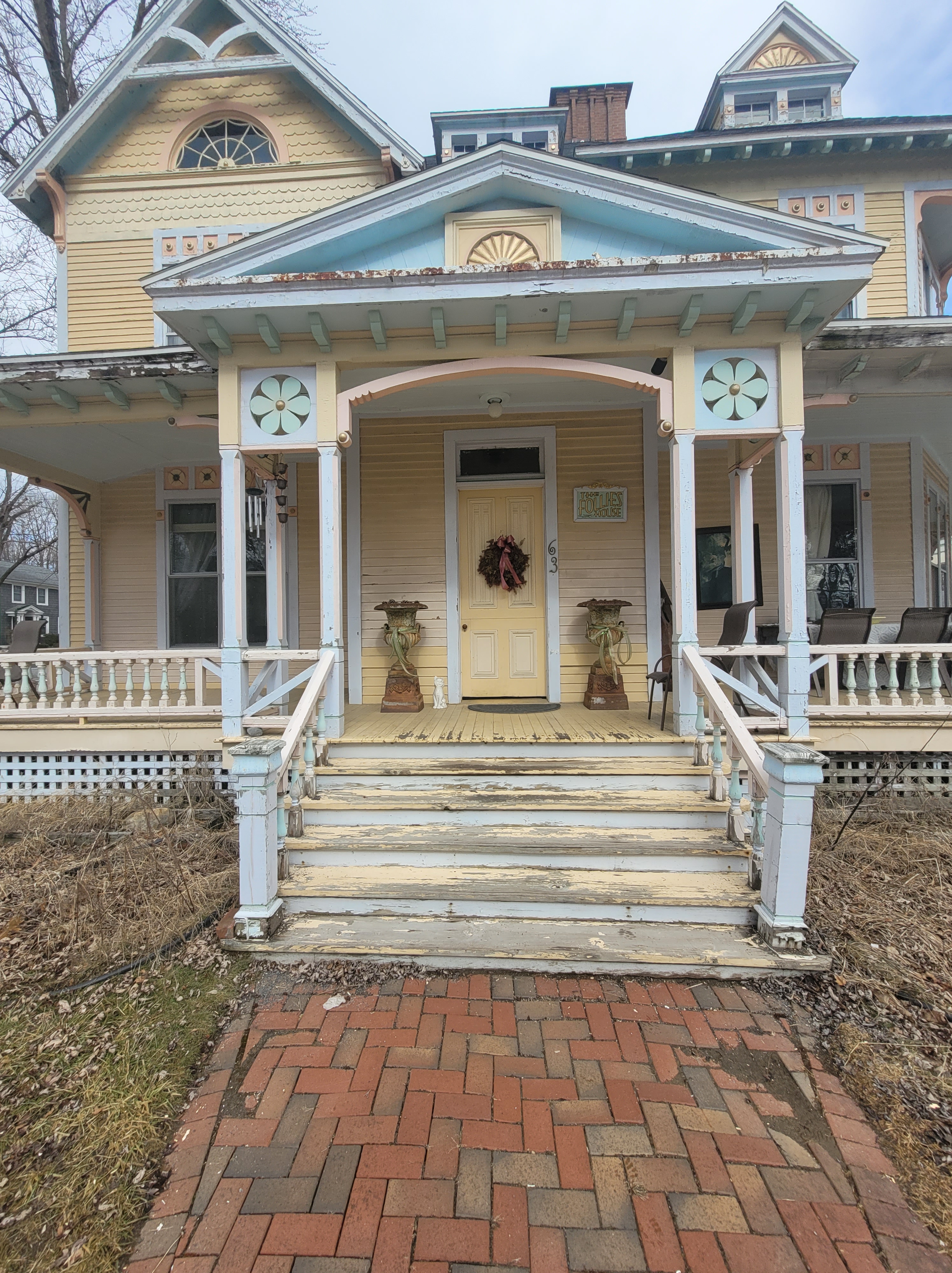
With last names like Smiley and Funk, you know there’s bound to be something creative going on in the imaginations of this Ballston Spa duo. The couple, both natives of San Diego, Calif., purchased a house at 63 East High St. last May. Luellen Smiley and Rudy Funk have turned a once-ramshackle 1860’s structure, now known as The Follies House, into three furnished apartments oozing with zany charm. Smiley’s brochure touts the place as a “playful vacation residence designed to inspire.” On the wide front porch, a sign offers visitors “Free Records,” paying homage to one apartment’s main decorative inspiration: classic stage musicals. Called the Broadway suite, its walls are adorned with record covers, programs, ballet slippers and even a dance costume. There are dice on the end tables, a life-sized poster of Humphrey Bogart, colorful paper parasols and peacock feathers. For tenants who bring their own films, there’s a projector screen and, tucked into an alcove, a working Victrola. Vintage Broadway memorabilia is everywhere. Then there’s the nearly ceiling-height replica of a bass guitar. “This was actually a costume someone wore,” said Smiley, pointing out the head and arm holes. “These are the kinds of things we like, the really unusual andunheard of.” Growing up in California, Smiley aspired to be a dancer and maintained an interest in the arts.
THE FOLLIES HOUSE
In recent years, she became keen on the idea of renovating and decorating an older home, although the village of Ballston Spa was not first on her list. “When we first came here, I wanted to be in Saratoga, and when I drove through Ballston Spa I said, ‘I’d never want to live here,”‘ Smiley said. “But then we rented here, and I didn’t want to go back on the road. We loved this street. We think this village is really starting to happen.” The couple went to work feverishly last spring to ready the apartments in time for the track season. While not a bed and breakfast, the apartments are designed for temporary tenants — people new to the area or vacationers. Smiley’s off-season rates are $800 a month for the Broadway Suite and $700 for the Boomers Pad. The one-bedroom Boomers Pad is designed with vintage ’50s and ’60s furniture. Smiley said she and Funk combed area antique shops, including those in the village, for many of the offbeat pieces, including the vinyl records and oversized pink sofa. The house’s history mirrors the eclectic style the couple hasbrought to the home. “It was built by a man actually named Dr. Doolittle as a wedding present for his daughter,” Smiley said. “You can see the little touches everywhere. There are butterflies and sun rays carved into the woodworking and doorknobs. It’s a love house. It was built with love.” Smiley said she and Funk have combed files at Brookside History Center looking for old photographs of the house in order to decide what color to repaint the facade. “The exterior of the house is next on our list, and while we haven’t located any photographs, we’re thinking pastels,” Smiley said. “Inside, we used a lot of pistachio and pink.” While Funk commutes to and from California for business purposes, the pair weathered their first winter this year, relying on the kindness of neighbors for jobs like snow-blowing. “We’ve never seen winters like this,” Smiley said. “I’m from the other side of the world. But this is a very supportive community. That’s one of the things we love about the village.”
Smiley has immersed herself in the closely-knit community, joining the Ballston Spa Business & Professional Association, the local chamber of commerce, and helping promote an upcoming Art Walk. The Follies House recently was given a beautification award for significant improvements during the past year. In her brochure for potential tenants, Smiley points out area highlights including the Saratoga Performing Arts Center and destinations within the village, such as the museums, the glassworks studio, Art Ink., and the new gallery and loft spaces on Low Street. Smiley said she also recommends people take a stroll along East High Street, a historic district known for its Victorian homes. “I’ve seen little villages, big villages — but what I see here is the most beautiful village,” Smiley said. “The potential is here. There’s a sense of magic here and the transformation will happen. I’m certain of that.”
I’ve written in the genre of Creative Nonfiction, integrating the events through dialogue, journal entries, and a third-person narrative. Within three locations, Santa Fe, New Mexico, Los Angeles, California, and Saratoga Springs, NY. Greta (me) exposes the mutilation gaslighting abuse inflicts on her emotions, psychology, mental and physical health, and her finances.
My direction is following Lawrence Durrell, “Spirit of the Place,” and living where I would never expect to live. I wish I could control my impractical, impulsive, and annoying spirit of adventure. I think about architecture, Jewish deli’s, Italian restaurants, at one movie theater built in the 1930s, and neighborhoods of unfamiliar lighting, expressions, and conversations. Gambling on yourself is how much you can adapt, change, influence, and accept the days of your life.
In my syndicate, there must be a dozen pals with the same unsolved equation. Is it age that blocks me and maybe you from relocation, or is it the trauma and stress? What liberation to just pack a suitcase and board a plane like in the movies. Separation from the familiar. The spirit of adventure has arrived. My home sold and so relocation isn’t a muse any longer, it’s reality. Today, coincidently is Independence day and so am I. It is a day of nostalgia. The Rudster painting Follies. It took two summers to remove the aluminum siding, scrape, caulk, prime, and paint my chosen seven colors to resemble a wedding cake. Mr. Doolittle built the home in 1883 as a wedding present for his daughter.
The Rudster painting Follies. It took two summers to remove the aluminum siding, scrape, caulk, prime, and paint my chosen seven colors to resemble a wedding cake. Mr Doolittle built the home in 1883 for his daughter as a wedding present.
I’ve written in the genre of Creative Nonfiction, integrating the events through dialogue, journal entries, and a third-person narrative. Within three locations, Santa Fe, New Mexico, Los Angeles, California, and Saratoga Springs, NY. Greta (me) exposes the mutilation gaslighting abuse inflicts on her emotions, psychology, mental and physical health, and her finances.
Page 525. Terrified to post this but it is Sunday and I’m brave on Sunday. The book is fiction, first-person, and close third person so you’ll need a jogging suit to read. Based on true events.
Greta let the moment of the village rescue stay with her, like a new pet for as long as she could hold on to its beneficial ointment, away from what she calls her immersion into self. She gives me examples that illustrate her obsession with matching outfits in her closet.
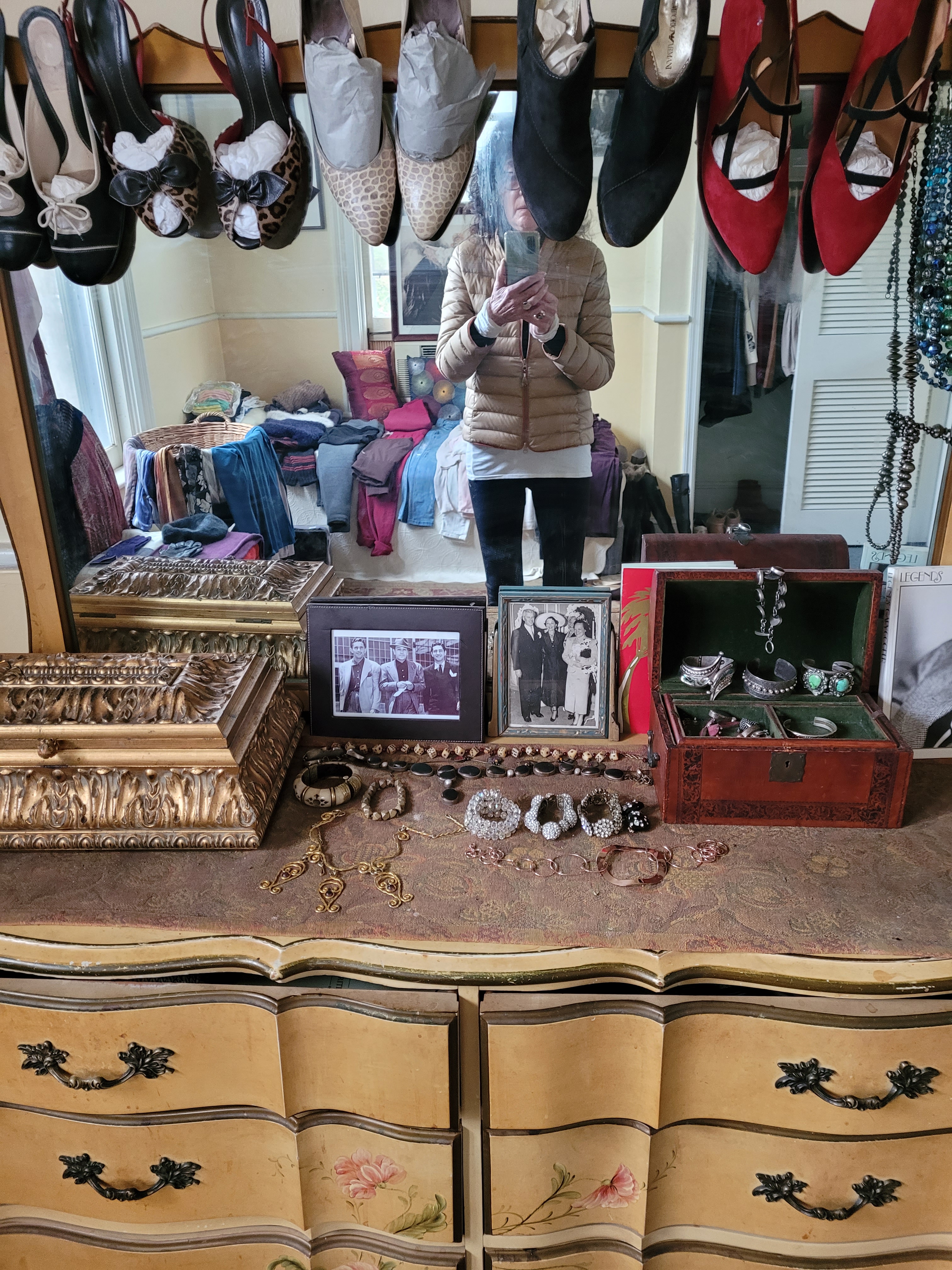
It’s a bedroom she converted into a dressing room. There’s a single bed against one wall, a cabinet where she stores the winter boots, and an eight-drawerFrench nouveau dresser and mirror. She sits on a chair facing the windows so she can watch the trees live through sun, wind, rain, and snow. Across from the chair is the bed. She diligently arranged her summer pastel skinny jeans on the bed, and next to that row she arranged the T-shirts, camisoles, and shorts. It’s quite practical considering Greta as she has admitted to me half a dozen times, that she was born without common sense or practicality. At the base of the bed, she lined up her shoes, the slip-ons, the flats, the pumps stuffed with tissue paper to preserve their shape, and the wedges. After a breach of sanity, she goes into this room and visualizes outfits and color matching like someone might play chess. ‘ It does have a purpose, this way I visualize without wrangling with hangers and you know it just takes too much time when you’re in a closet.
‘”These days I look at them as if they belonged to someone else, I mean the red suede with gold heels that I wore on a New Year’s Eve of gaiety and not since, the black velvet pumps that always make me feel dainty and light. What care I give to all these garments when in the other part of the house, Dodger was descending into a financial coma.”
Greta did not acknowledge the few months before his departure that he was riddled with abject unfulfilling tasks, bills, and construction jobs that no longer fed him purpose and accomplishment. She did not notice that his slacking posture on the front porch, head lowered and staring out without any body movement was a sign, she in fact despised it and walked away. In the last few months, all of this seemed to rise up like a curtain before a play, in a theater and she witnessed his insolence and his silent howl for help.
The irony of her activity is that she doesn’t go to the events that she plans on going to wear the outfits.
I’ve written in the genre of Creative Nonfiction, integrating the events through dialogue, journal entries, and a third-person narrative. Within three locations, Santa Fe, New Mexico, Los Angeles, California, and Saratoga Springs, NY. Greta (me) exposes the mutilation gaslighting abuse inflicts on her emotions, psychology, mental and physical health, and her finances.
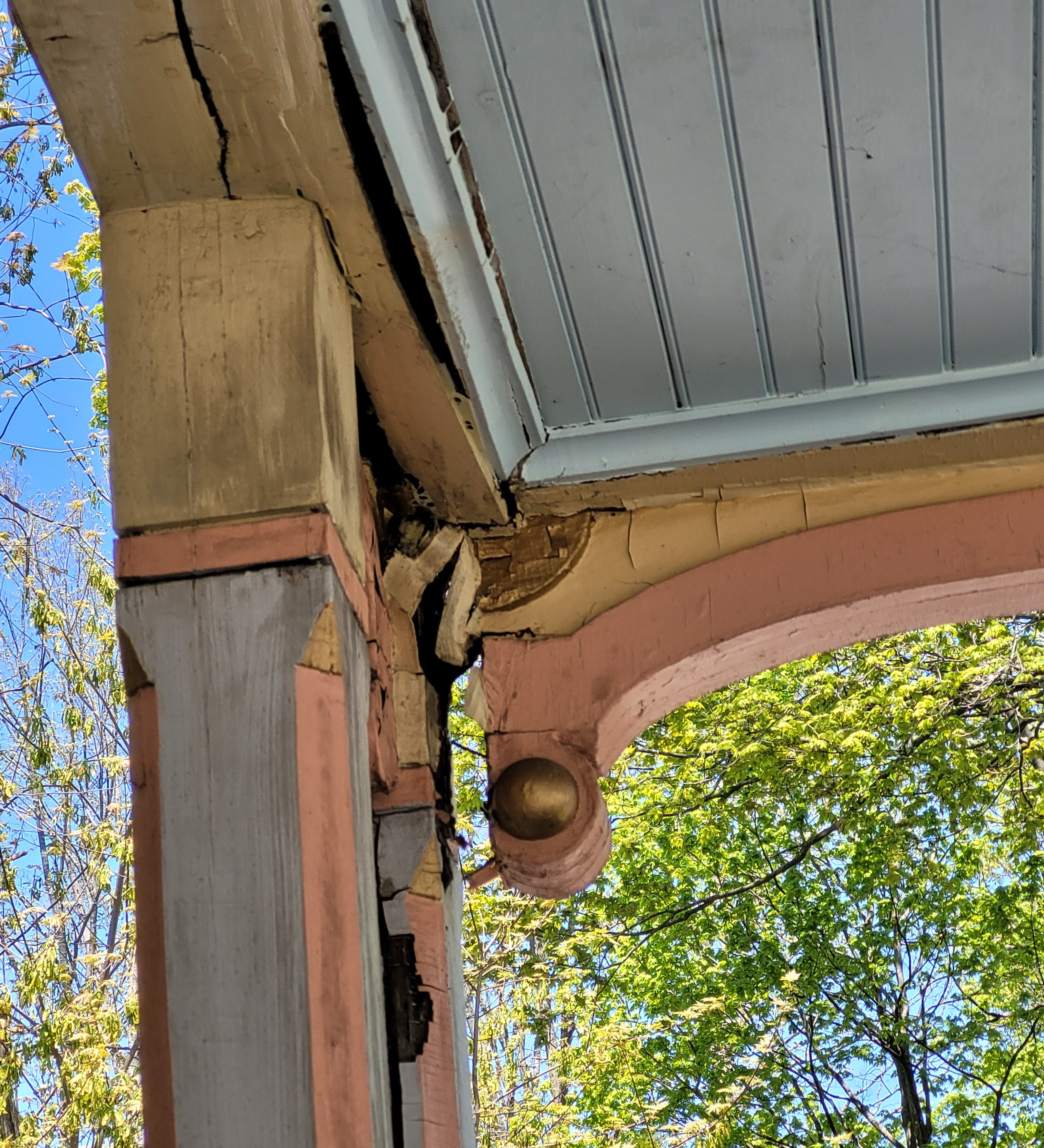
Looks like an open dragon mouth, in a way it is. Follies House is begging for a brace. The horrors and hahas of owning a 137-year-old home. We’ve had twenty-two years of sustainable wood, but this year is the end of luck. A dear and wise friend once told me this, ” Don’t love what doesn’t love you back.” As a woman of insatiable imagination and impracticability, I do love her. So I spent a few weeks interviewing masonry contractors. The first four said this, ” I wouldn’t park your car under there.” “What? The carport is going to collapse?” “It could.” ” And that costs? ” Fifteen thousand at minimum.” ” What about a temporary fix.” ” Too much liability. Sorry, mam.”
Five interviews later talking to a man whose been in the business thirty years, ” I cannot restore the entire job, is there a temporary fix?” “Well, we could bring in a platform plank to hold it up.” ” How much would that cost?” “Twenty-five hundred tops. You should really let us remove the foundation above it, that’s rotted and sinking. Is there a room above it?” “Yes, a bedroom in my unit. How much would that cost?” ” Between ten thousand and fifteen. We have to get in there and see how much water damage.” ” No, I can’t do that, no impossible.” ” I understand. I’ll do the temporary fix, the house is so gorgeous, and I’ve seen them all.” ” Thank you, I have tenants and have to be responsible for their safety.” ” Would you like to see the bedroom?” ” I’m in a rush.” I smiled a lot and walked up the stairs and opened the front door so he could see. “Wow, this is incredible.” Once he was in the house he was in love and granted me a discount of five hundred dollars. Do you know why? He said he’d love to be a part of her history after he’s gone. Historic homes are leaving our country, replaced by what he called tinderboxes that only last thirty years.
I’ve written in the genre of Creative Nonfiction, integrating the events through dialogue, journal entries, and a third-person narrative. Within three locations, Santa Fe, New Mexico, Los Angeles, California, and Saratoga Springs, NY. Greta (me) exposes the mutilation gaslighting abuse inflicts on her emotions, psychology, mental and physical health, and her finances.
In December 2018, I relocated to Ballston Spa, New York ( like the Adirondacks) from Los Angeles, for a temporary stay. I checked out of my charming Kleenex box studio in Westwood Village with bougainvillea, assorted flowers, squeaky clean green lawns, and shiny MBZ, Porches, and Maserati’s racing up Beverly Glen Boulevard. I met eccentric neighbors with prominent film, TV, and Tech careers. The homes sell for 2-8 million. My four-hundred-square-foot studio rented for sixteen hundred-plus utilities, and street parking. Moving y car twice a week for the street cleaner was an annoyance. I didn’t understand why he came twice a week, the street was living room tidy, no trash or cigarette buts, and very few leaves.
The last time I was driving along these rolling roads past farms, fields, shabby chic barns, horses, and the forest was in 2012 with my co-owner, renovator, best friend Dodger, and my fiancé Jay. Now I am a subterranean single, with a belt-tight debit card.
As the driver swerved into the driveway, my mouth dropped, frozen for a moment. Follies was frayed, peeling paint, the cracked driveway got worse, the flower beds were now weeds, and dried fall leaves all around. Dodger and I spent twenty years maintaining her glory and, provenance until the last six years. She needs a face-lift, a porch lift, a stairway replacement, an entirely new coat of paint (we used seven pastel shades on all the trim) on the five thousand square feet three-unit home. The swell of guilt emerged when I discovered what I’d ignored did not take care of itself.
Until I procure a tenant for the vacant three-bedroom apartment, I’ll move in and attempt to repair and maintain what I can afford. A pang of overwhelming sadness emerged into a sobbing session. Afterward, I felt a lot better! I’ve never understood why so much argument is against emoting-where else can it go? Into hiding, only to pop out at the wrong moment.
I opened the wooden front door with stained glass inlay and dropped my luggage. Where the fxz$% is all the furniture?’ When I was here in 2012, I had just redesigned the rooms, polished the wood, and shined our antique mid-century furniture collection. The salon captures everyone’s attention, with its cherry wood ceiling and baseboard trim, leather embossed fireplace, and the floor-to-ceiling original windows were stripped of the drapes.
The last time Dodger was here, I think in 2015, he made repairs and replacements over two months. He must have sold the furniture or what? We are not in contact any longer. In the Salon one tattered pink swing 60s sofa, all the tables and chairs the roulette table, stereo, TV, porch bar set, and photography absent. Upstairs, to the bedrooms, I entered the guest bedroom, stripped, except the gorgeous three-panel engraved black and ivory divider.
As I roam further, my lips quiver, I am cursing non-stop, then I step into my bedroom, I call it Heaven. The room is painted the most subtle shade of wisteria, and the floor-to-ceiling windows reveal all the light against the handsome spruce, pine, oak, and evergreen trees. Wow! the room is furnished with a desk, a lamp, bedside tables, and a new comforter and pillow shams to match. It’s as if someone was expecting me. But who? To be continued.
I’ve written in the genre of Creative Nonfiction, integrating the events through dialogue, journal entries, and a third-person narrative. Within three locations, Santa Fe, New Mexico, Los Angeles, California, and Saratoga Springs, NY. Greta (me) exposes the mutilation gaslighting abuse inflicts on her emotions, psychology, mental and physical health, and her finances.
AWAKENING ON THE ROADRUNNER SHUTTLE as we chugged up the steep grade highway, the red skin of Taos peeled back the imposing medieval Gorge crack. The cavity unzipped and five thousand feet below was the Rio Grande. I felt the altitude filling my lungs, and my eyes twitching from one scenic masterpiece to another. Everyone in the shuttle was giving me a history lesson about Taos. Before I knew it, the shuttle door opened, and the driver yelled, ‘Smiley.”
At the end of a two-mile dirt road the shuttle dropped me off and I was shouldered on either side by melting banks of snow. It was April. Unexpected snow storms arrived the same week.
The FBI boxes I’d shipped were in front of my casita. Darting from room to room, thoroughly satisfied with a two-story loft, floor-to-ceiling windows, and sunlight in all the right spots. I unpacked in the sedated silence. Was I all alone out here? A few other casitas were on the property, but they looked vacant. A pang of anxiety seized and then I realized, I had a cell phone, a credit card, and cash. I could always call a cab right. It was winter in April; the first time I’d lived in falling
DH. LAWRENCE WRITING ROOM. TAOS.
snow. In the dining room, I unpacked the boxes and arranged them in a circle around the table. It was a heavy southwestern oak table, twelve feet long, and to the right were sliding glass doors that let the light stream across the black-and-white print. I was left to unravel two thousand more pages on Dad’s criminal life.
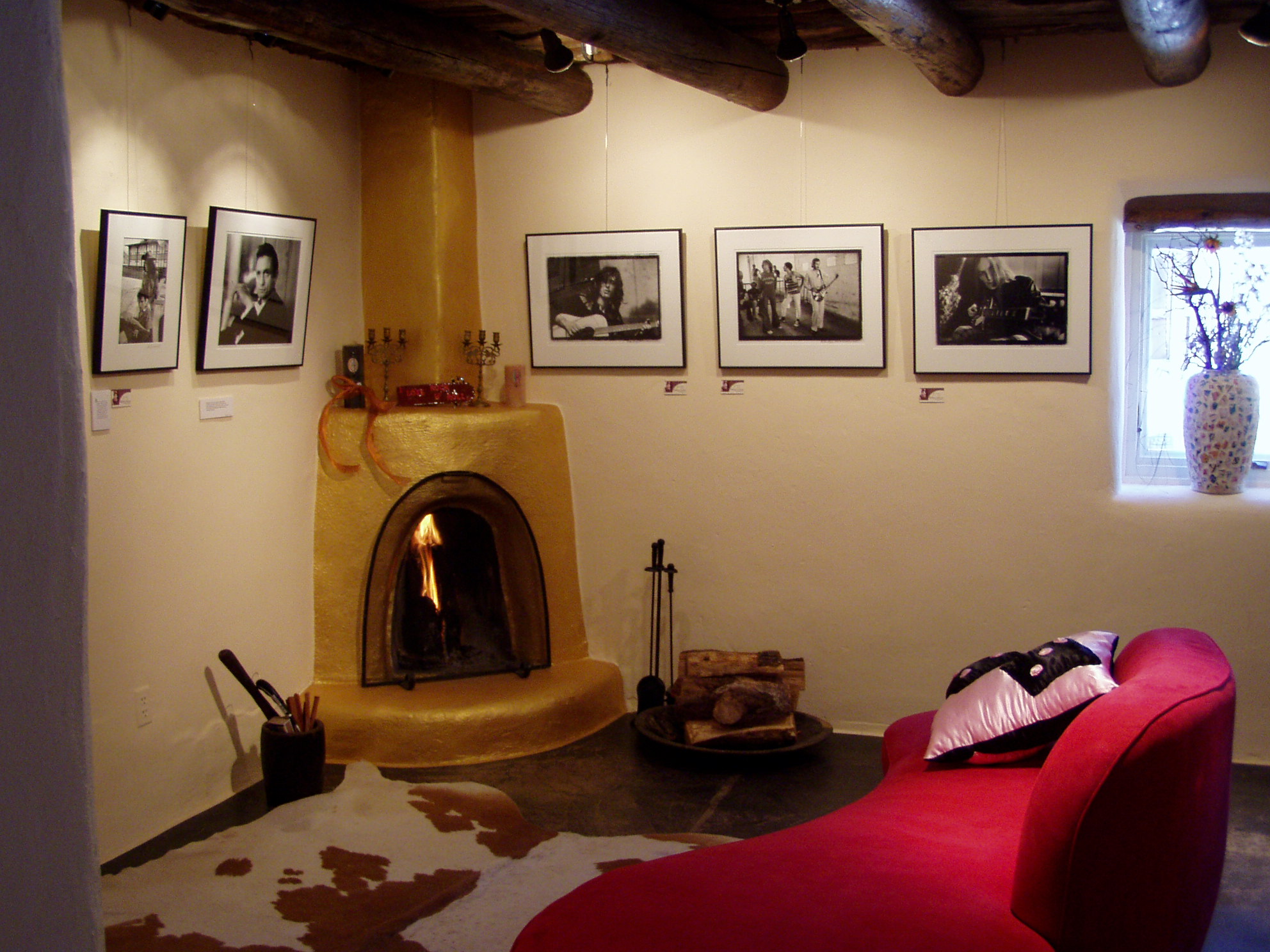
The trip was extended to two months. I read all the files and left Taos a different woman. I came back, persuaded Rudy to come visit, and he was hooked within minutes. He bought the Live Work Studio and fulfilled my dream of opening a Gallery of Black & White Photography of our 60s Rock & Roll legends.. One of Lou Reed shooting up heroin.
I’ve written in the genre of Creative Nonfiction, integrating the events through dialogue, journal entries, and a third-person narrative. Within three locations, Santa Fe, New Mexico, Los Angeles, California, and Saratoga Springs, NY. Greta (me) exposes the mutilation gaslighting abuse inflicts on her emotions, psychology, mental and physical health, and her finances.
The throw of the dice this week lands on adventures in livingness; one day at a time. People with terminal illness, suffering from a shattered romance, a death of a friend, a natural disaster, always say the same thing; One day at a time.
Walking up Palace Avenue on a day spread with sunlight, and a continuum of power walkers, bikers and runners, passing by in whiffs of urgency, I took my time. I didn’t feel like flexing, just evaporating into the shadows, and the moving clouds. I walked by a little adobe, that once was a dump site for empty bottles, cartons, worn out furniture, and piles of wood. A year later, the yard is almost condominium clean. Just as I was passing the driveway, the little woman whom I’d seen walking up Palace with her bag of groceries, appeared like a gust of history in the driveway of her adobe casita. She wore her heavy blanket like coat and a bandanna on her head. Regardless of weather, she’s bundled up in the same woven Indian coat and long wool skirt. I stood next to her, a foot or so taller, and she unraveled history, without my prompting. She told me about the Martinez family, the Montoyas, and the Abeytas, all families she knew, all with streets named after them. Estelle asked me my name, and then took my hand in her weathered unyielding grip, ‘Oh I had an Aunt named Lucero, and we called her LouLou.’ She didn’t let go of my hand, and then she told me that the families, some names I’ve forgotten, bought homes on Palace in 1988 for $50,000, She shook her finger to demonstrate her point. ‘You know how many houses the Garcias bought? Five! Then they fixed them up and sold them.’
I could have stood there in the gravel driveway listening to Estelle all afternoon. She owns the oral history I love to record; but it is difficult to understand her, she talks with the speed of a southwest wind. We parted and I thought about the times in my life when the smallest of interactions elevates my spirit. In older people, who are not addicted to gadgets and distant intimacy, I’m reminded of how speed socializing has diminished the opportunity for a sidewalk chat.
I’ve written in the genre of Creative Nonfiction, integrating the events through dialogue, journal entries, and a third-person narrative. Within three locations, Santa Fe, New Mexico, Los Angeles, California, and Saratoga Springs, NY. Greta (me) exposes the mutilation gaslighting abuse inflicts on her emotions, psychology, mental and physical health, and her finances.