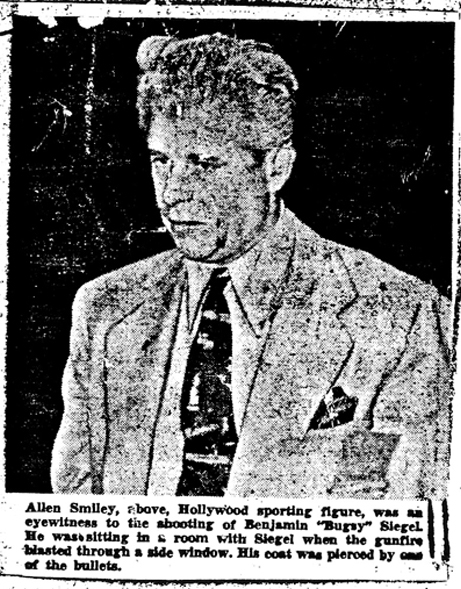
Luellen Smiley is a creative nonfiction writer, author, columnist, and historian whose writing is deeply rooted in a controversial personal history. She is the daughter of Allen Smiley, a close friend, associate, and business partner of notorious Las Vegas gangster Benjamin “Bugsy” Siegel. Her father was sitting only feet from Siegel when Siegel was murdered in Beverly Hills on June 20, 1947.
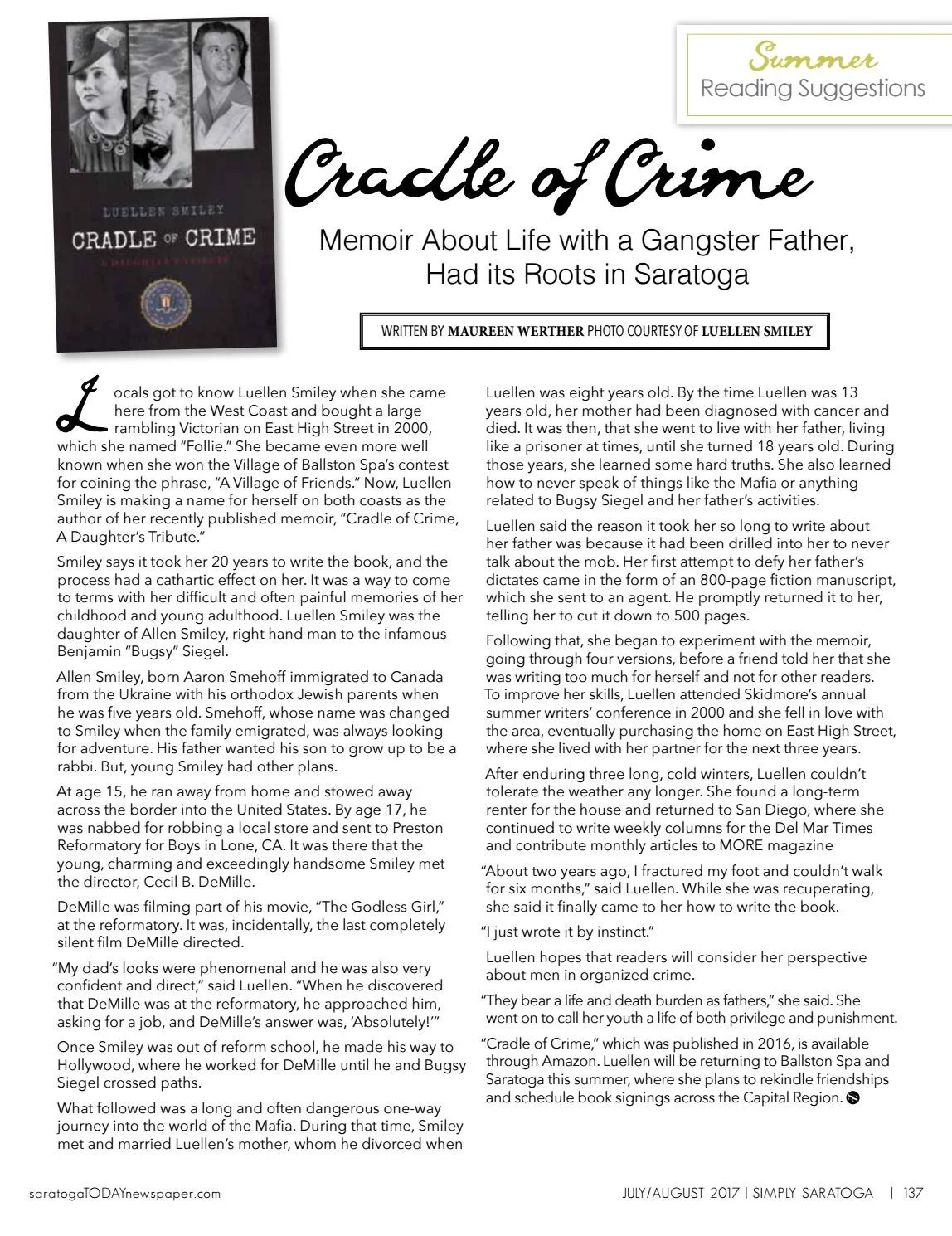
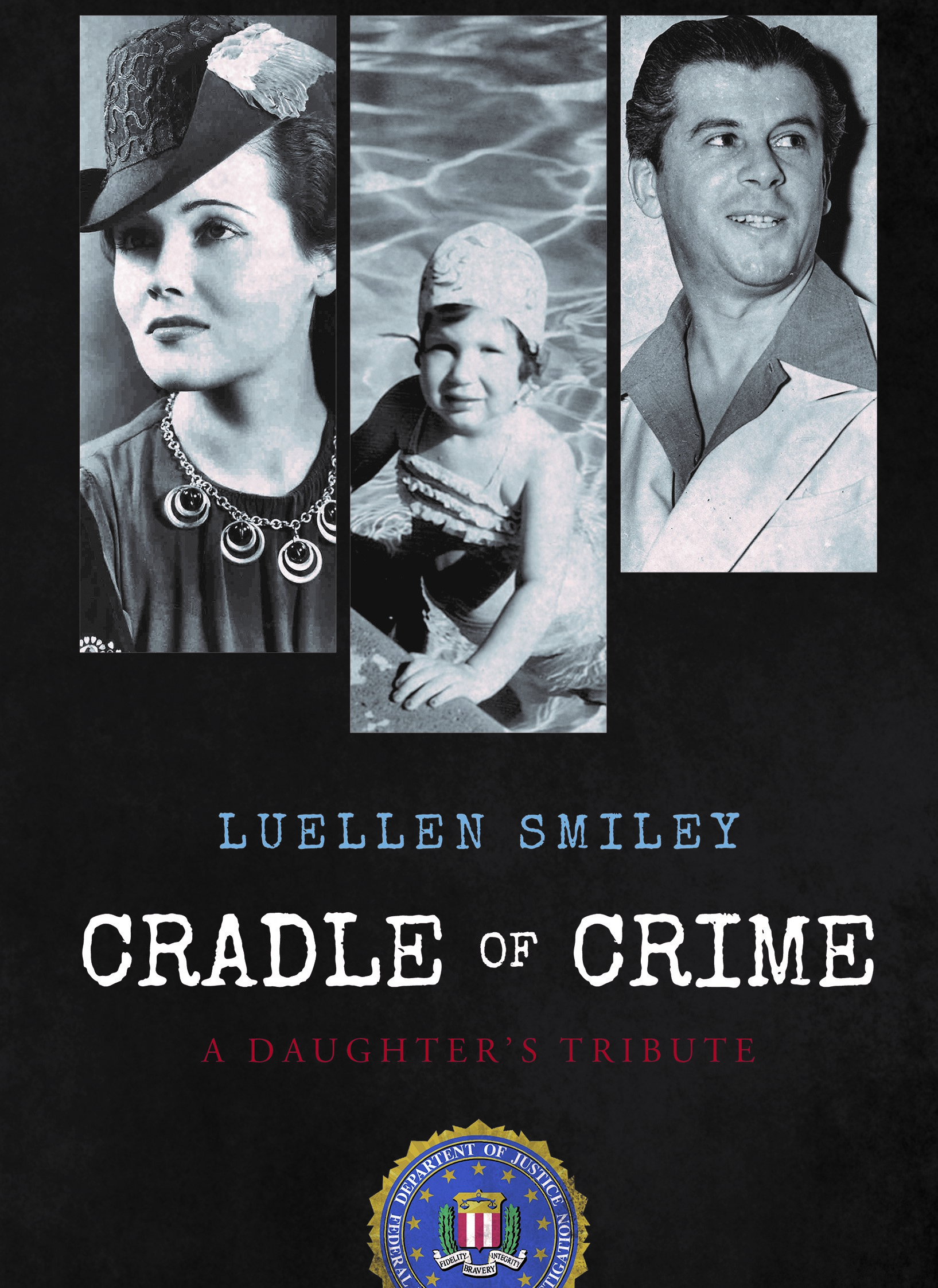
That extraordinary childhood history became the foundation for Smiley’s first book, Cradle of Crime: A Daughter’s Tribute, published in 2017. The memoir explores what it was like to grow up as the daughter of a man connected to organized crime while trying to reconcile her love for her father with the secrecy, fear, and criminal world surrounding him.
Smiley’s work has appeared in publications including the New York Post, MORE Magazine, Southern California newspapers, and Authorlink. She wrote the newspaper column Smiley’s Dice—Adventures in Livingness, which earned a Blue-Ribbon Award from the California Newspapers Association for her Growing Up With Gangsters columns.
Her interest in her father’s history also led her to become a researcher and commentator on organized crime history. She has participated in television, radio, and documentary interviews.
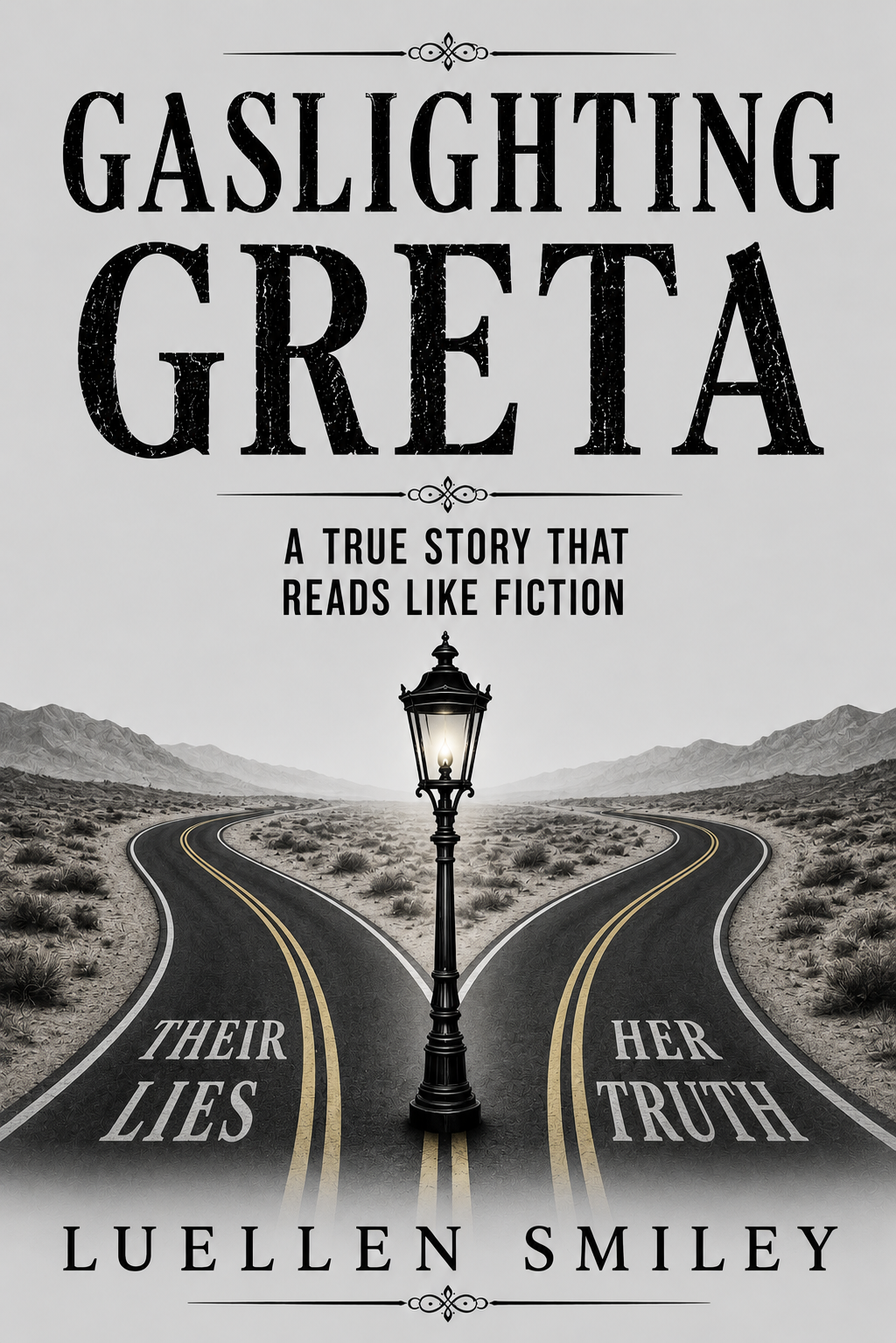
Smiley’s next book, Gaslighting Greta, will be published this year. A personal story that reads like fiction. Her own website describes the project as exploring a woman whose life is destabilized by gaslighting and psychological manipulation.
Her writing career reflects a recurring theme: using personal experience and research to uncover the truth behind complicated relationships and extraordinary lives. From the secretive world surrounding her father and Bugsy Siegel to the deeply personal territory of Gaslighting Greta, Smiley’s work transforms difficult experiences into stories of survival, discovery, and ultimately reclaiming one’s voice.
Luellen Smiley is an author whose life has given her an unusual perspective on secrecy, manipulation, family loyalty, betrayal, and survival—and she uses that perspective as the raw material for her nonfiction storytelling.
Author Luellen “Loulou” Smiley turns an extraordinary experience of deception, discovery, love and forgiveness into a riveting new memoir.
COMING SOON — How far can a lie travel before the truth finally catches up with it?
In Gaslighting Greta, author Luellen “Loulou” Smiley takes readers inside a deeply personal story where what appeared to be true—and whom she believed she could trust—slowly began to unravel.
What follows is not simply a story about gaslighting.
It is a story of suspense, inconceivable mystery, humor, self-reckoning, love and, ultimately, forgiveness.
Smiley recounts the experience with the perspective of a woman forced to examine not only the actions of others, but her own instincts, choices and understanding of what was happening around her. The result is a memoir with the tension and unexpected turns of a psychological novel—except it happened.
“A PERSONAL TRUE STORY THAT READS LIKE FICTION.”
Gaslighting Greta also marks the latest work from Smiley, author of Cradle of Crime — A Daughter’s Tribute, her memoir exploring her father’s extraordinary history through FBI files, court testimony, government surveillance records and her own experience as his daughter.
With Gaslighting Greta, Smiley turns the lens inward.
The book explores a question many people eventually confront in one form or another:
What happens when you discover that the story you have been living isn’t the story you thought it was?
Rather than presenting herself simply as a victim of deception, Smiley examines the far more complicated territory of recognizing the truth, reckoning with herself, finding humor amid the unbelievable, and deciding what comes after the discovery.
The result is a story about far more than gaslighting.
It is about trust. Truth. Friendship. Human vulnerability. And the surprising power of forgiveness.
Gaslighting Greta is forthcoming.
ABOUT THE AUTHOR
Luellen “Loulou” Smiley is an author and memoirist whose work draws upon remarkable true events and the people caught inside them. Her previous book, Cradle of Crime — A Daughter’s Tribute, explored the intersection of family, organized crime and American history from the unique perspective of a daughter uncovering her father’s past.
In Gaslighting Greta, Smiley brings that same determination to uncover the truth to an intensely personal story—her own.
MEDIA / REVIEW / INTERVIEW INQUIRIES
Luellen “Loulou” Smiley Author, Gaslighting Greta [Email address: loulousmiley@yahoo.com Website: loulousmiley.com- under construction.
Publication date: To be announced Review copies: To be announced
I’ve written in the genre of Creative Nonfiction, integrating the events through dialogue, journal entries, and a third-person narrative. Within three locations, Santa Fe, New Mexico, Los Angeles, California, and Saratoga Springs, NY. Greta (me) exposes the mutilation gaslighting abuse inflicts on her emotions, psychology, mental and physical health, and her finances.
MISADVENTURES OF TODAY… Job boards alerts for the JOB I am perfectly suited for, are in Tallahassee or Wichita and require AI experience, and about seven variables of programs written as unrecognizable anagrams. I am only in my fourth month of job searching digitally, days of in person interviews are akin to eight-hundred-page novels.
My resume is professionally edited, posted on all the legit job sites and about ten questionable ones. I write personal letters to the museums, galleries, foundations and event planning departments, no reply, or the feigned friendly formal answer, ‘Thank you for contacting us! We do appreciate your time. We’ve chosen another candidate.’ The algorithm cadets are pushing me in the slush pile. Can you blame me if at least one day a week I scream silently. The bot bounty hunters are shooting me. Set this aside and see my phone, the icons on the home page change weekly, by a phonebot, and google decided to sync five thousand laptop photos on my phone. Now when I have to scan for a return to Amazon because they sent me two fans instead of one, the scan is where?
On my knees praying this laptop continues to behave or I will scream outdoors and be reported within seconds by a resident because Solana Beach bodies seem to obey all the orders. I tend to test authority, like not renewing my driver’s license for two years, and lying to my Doctor about my state of mind, because he’ll advise therapy and I self-analyze myself about everything, so why hear it twice.
The new modest home serves me what I came him for, ocean breezes, quiet, and private, neighbors that seem to harmonize, we can just say hi, is ok. At the intersection where I live, athletic, toned, and tanned looking males and females run, jog, walk, bike the sidewalks and streets in identical outfits. Sort of like a stage play and it’s inspiring to see that health is the way to live, I just don’t remember that culture dominating when I lived here. What I don’t understand doesn’t bother me, it’s a curiously about moving back home and feeling misfitted.Those of you who know me, have heard me say this about every location I move.
The ocean breeze, fan blowing against the curtain panes, bougainvillea bushes that colorize my terrace, the phone calls from friends, and edits sent by my publisher tranquilize the BOTS AND BOOBOOS.
Misfitted and anxious for acknowledgement due to not having ten thousand followers or whatever is the number, an author’s marketing team (everything seems to be in teams) contacted me with an offer to represent my book, Cradle of Crime-A Daughters Tribute published in 2017. Here’s the first paragraph of the first email.
The idea at the heart of Cradle of Crime is one that I had never encountered framed quite this way before. A daughter’s journey into her father’s criminal past, beginning ten years after his death. Most memoirs about family secrets are written as reckonings, as confrontations with the truth, as attempts to understand how a parent’s hidden life shaped the child who was left behind. You wrote something different. You wrote a book that is not just about uncovering the past, it is about the impact of that uncovering on your own identity, about the humiliation, rage, shame, and acceptance that came with discovering that your father was Benjamin Bugsy Siegel’s best friend and business partner. And you built that entire idea around the truth that the secrets our parents keep are not just their own, they become ours, and that the work of understanding who we are often requires us to confront who they were, even when what we find is devastating. That reframe is everything.
Six emails later and digging through all the scam searches, I discovered BOT LITERARY HOAX. On my base she pitched me the marketing plan, without cost. Now I have a comprehensive skill set to use! Sample: Listopia, ARC team, enhanced keywords, categories, Amazon Ads, metadata overhaul, refresh, etc. I did not use any of these when I self-published. I thought about reporting them, No, they can hack me!
This week, another author marketing team contacted me with a similar, your story resonates with multiple markets you haven’t accessed. So, I decided to ask ChatGPT to run a check. One minute didn’t pass before this was returned. The opening sentence was, Luellen, I wouldn’t advise this company for Gaslighting Greta! BOT brilliance, he remembered from a previous question.
Absolutely. I can recreate the Michael Literary Team assessment we just did.
I would not send them money, your complete manuscript, financial information, passwords, or other sensitive material until the company is independently verified. I would not call it definitively a scam based solely on the evidence, but there are enough warning signs that I would not treat it as a conventional, established literary agency without further verification.
Major red flags we identified
Multiple/near-duplicate domains
There appears to be both a correctly spelled Michael Literary Team site and a misspelled “Micheal” version.
This is unusual and raises questions about the history and ownership of the operation.
Changing personnel and biographies
Names and positions appearing on the sites have inconsistencies.
Some biographies have the feel of generalized/template-generated profiles rather than independently verifiable publishing-industry résumés.
Website/template errors
We found repeated spelling, wording, and structural errors.
There were also inconsistencies in company information.
Incomplete Chicago address
The claimed Chicago presence did not provide the kind of easily verifiable business information you would expect from an established literary agency.
Very broad range of services
The operation appears to offer an unusually wide combination of literary, publishing, marketing, cinematic, and related services.
That isn’t proof of wrongdoing, but it warrants scrutiny.
Testimonials are difficult to independently verify
Testimonials on a company’s own website aren’t strong evidence of legitimacy unless the authors and their publishing histories can be independently confirmed.
The Gavin Westbrook example
We found outside discussion concerning a $1,000 package and a relatively small independent social footprint.
This deserves additional verification before relying on the testimonial or client claims.
Weak independent footprint
An established literary agency would normally leave a substantial trail outside its own websites: reputable publishing databases, established agents, publisher relationships, industry references, verifiable authors, rights sales, etc.
Part 2 — Connection to Susan Literary Team
This was particularly interesting.
We found evidence suggesting a substantial connection between Michael Literary Team and Susan Literary Team, including:
Emmanuel Carter appearing in connection with both.
Susan Cinematic appearing on the older/misspelled Michael site.
Susan Cinematic being associated with the Susan organization.
Similar website structures, services, Chicago references, and wording.
The Susan domain appearing to have been registered on March 21, 2026.
Similar language concerning a “bulk buyer strategy.”
Repeated copy/wording errors across the sites.
That does not, by itself, prove fraud. But the similarities make the relationship between these organizations an important issue to investigate.
Bottom line
My assessment was essentially:
HIGH CAUTION — do not pay until independently verified.
The evidence is strong enough that I would not recommend treating Michael Literary Team as a verified, traditional literary agency at this point.
And importantly, the 75–85% figure we discussed was a “do not pay until independently verified” risk assessment, not a mathematical probability that the company is fraudulent.
I’ve written in the genre of Creative Nonfiction, integrating the events through dialogue, journal entries, and a third-person narrative. Within three locations, Santa Fe, New Mexico, Los Angeles, California, and Saratoga Springs, NY. Greta (me) exposes the mutilation gaslighting abuse inflicts on her emotions, psychology, mental and physical health, and her finances.
I’ve written in the genre of Creative Nonfiction, integrating the events through dialogue, journal entries, and a third-person narrative. Within three locations, Santa Fe, New Mexico, Los Angeles, California, and Saratoga Springs, NY. Greta (me) exposes the mutilation gaslighting abuse inflicts on her emotions, psychology, mental and physical health, and her finances.
I just came across this post and thought maybe a writer in waiting will read this and keep on truckin!
IN NOVEMBER OF 2005 I reserved a space at the San Francisco Writers Conference. I was nervous and edgy when I boarded the plane. My pitch proposal, pitch suit, and pitch necklace, were tucked inside my suitcase. The pitch convinces an agent or publisher, that you know your subject well enough to feel one hundred percent confident. It may sound irrational that a writer could work five years on a book and not know what it is about. As an emerging writer I view my work through a kaleidoscope lens. I see multiple themes, subplots, and messages, and they change with each reading. Then there are loose knots of personal misery, lost versions and rejections ringing in my ears. My pitch has to convince an agent, that at least 5,000 people will buy my book. The pitch suit is the outfit you wear for an interview; only for writers, the guidelines are very loose. Some writers wear their narrative. I brought my tailored, looking successful, pants suit. My pitch necklace is a gold Buddha medallion that my father had designed for my mother. I wear it for good luck and because I know the necklace has survived all the family tragedies. The conference is at the St. Francis Hotel at Union Square.
OLYMPUS DIGITAL CAMERA
It was pouring when I arrived. The staff at the front desk greeted me with musical familiarity. Every time I swished by they called out, “Hello, Ms. Smiley.” I imagined them as a chorus singing my name. I arrived one day early to pace the galleries, cafes, museums and Saks. After the first night, I had to switch rooms. I was directly above the street dumpsters, where for hours the chugging of trash kept me awake. I moved frantically, to scoop everything up and not miss a moment of San Francisco. After switching rooms, I dashed over to the Espresso Bar. It faces the corner of Powell and Sutter. Outside, the streetcars clanged by, passengers dangling from the bars like vines on a tree. In between the tracks, workers both blue and white-collar, and some without any collar at all, jammed the sidewalks on foot, bicycle, moped and skateboard. With phones and iPods attached, eyes alert, they buzzed on the vibe of Saturday, moving like musical notes in a symphony.
OLYMPUS DIGITAL CAMERA
In the café an elderly woman wearing a SFWC name tag was seated next to me. I noticed she positioned her book on the corner of her table. She looked overwhelmed and frightened. As I introduced myself she smiled courteously, and said she was a neurotic housewife all her life and didn’t have much to write about, so she wrote about her husband’s war stories. I told her she should write about the neurotic housewife. Just as I was leaving, she stopped me and thanked me for speaking to her. “There’s always a guardian angel around.” Her voice lingered in my thoughts all weekend. At six o’clock that evening, I was gliding around my room dressing for the gala. I reached for my jewelry bag. It was gone. The weekend was ruined! I would never get published, I’m too wired, too reckless, too distracted. I called the front desk. Heather said she would call me back. Bang, bang, bang, went my shoe against the bed frame. Then the phone rang. “Hello, Ms. Smiley. I’m sending the bellman up with your jewelry.” I answered the door recoiling with pained joy. The bellman listened attentively. I rushed upstairs to Harry Denton’s Starlight Room. There I began wine tasting with Maggie, Peg and George; three new comrades in a room of hundreds. I spent the next day among more comrades, writers with unpublished stories, books, and works-in-progress. I listened to panels of writers; agents and editors discussed the fateful downward spin of publishing and upward battle towards reward. We sat in our chairs looking overly anxious, taking copious notes, and waiting for answers to our questions. At the end of the panel discussion we all lined up to meet the agents and editors. While we stood in line we met each other. “What’s your story about?” the woman behind me asked. “Growing up with gangsters,” I replied. “ Oh well! That will get you an agent.” “ I hope so.”
During the conference, I experienced a lucky throw of the dice. I met one of my mentors; Joyce Maynard. Her book, “At Home in the World,” is on my beside table. Joyce was published in the New York Times when she was sixteen years old. JD Salinger read the piece and invited her to live with him. Joyce’s story will send you back to reading Nine Stories. As I progressed through the circle holding my pitch stick, the fear and apprehension subsided just a tiny bit. Three agents responded; ‘send me your manuscript.’ Naturally when I returned home, my hands were tied to editing. I rushed through, did not employ someone to copy-edit, and then ran about announcing my almost to be signed contract. Three months later I recovered from the rejections and began another rewrite and another until today, when I am on my fifth manuscript. This one feels right because I am not rushing through it expectant of publication; this time I know it will be published.
I’ve written in the genre of Creative Nonfiction, integrating the events through dialogue, journal entries, and a third-person narrative. Within three locations, Santa Fe, New Mexico, Los Angeles, California, and Saratoga Springs, NY. Greta (me) exposes the mutilation gaslighting abuse inflicts on her emotions, psychology, mental and physical health, and her finances.
I’ve written in the genre of Creative Nonfiction, integrating the events through dialogue, journal entries, and a third-person narrative. Within three locations, Santa Fe, New Mexico, Los Angeles, California, and Saratoga Springs, NY. Greta (me) exposes the mutilation gaslighting abuse inflicts on her emotions, psychology, mental and physical health, and her finances.
Weaving together events witnessed personally and those gleaned from friends, associates, historians, FOIPA, INS and archives of the Department of Justice, author Luellen Smiley’s memoir is a brief, heartfelt genuine reconstruction of family’s relationships of the past that neither dwells on nor dramatizes the true image of her father Allen Smiley, his allegiance to Benjamin ‘Bugsy’ Siegel and the criminal world.
Author Luellen Smiley details her childhood and growing up days as a gangsters daughter- elusive as it may be by immersing her readers through intriguing happenings of everyday and events of the bygone years that justify her fathers masked behavior and restrictions for his adored daughter.
Definitely ‘Cradle of Crime: A Daughter’s Tribute’ is a straight forward homage to a father and a triumphant tale of a daughter who broke barriers of secrets to reach the hardcore reality through her hardship and research. A not-to-be missed 5 star read ‘Cradle of Crime: A Daughter’s Tribute’ is a book for those who care for family morals and values and are willing to accept poignant twists in one setting. Highly recommended.
I’ve written in the genre of Creative Nonfiction, integrating the events through dialogue, journal entries, and a third-person narrative. Within three locations, Santa Fe, New Mexico, Los Angeles, California, and Saratoga Springs, NY. Greta (me) exposes the mutilation gaslighting abuse inflicts on her emotions, psychology, mental and physical health, and her finances.
A candid and enthralling memoir, CRADLE OF CRIME – A Daughter’s Tribute is the debut release from Luellen Smiley and it proves one of the most gripping and powerful books in its genre. Certainly no mean feat, given the swelling number of similarly themed offerings but Smiley does well to distinguish hers with painstaking research, a broad narrative sweep and intellectual grip to deliver a fascinating and revealing read, for the events it covers.
The storytelling isn’t redemptive with much of the most compelling material in this book being intensely personal but it is a very human story that dispels hype and myth and gives us a telling glimpse of a remarkable life. Weaving together several stories it makes a vivid and notable contribution to the mafia debate which invariably swings between the codes of honor and family values so often portrayed on the silver screen to a brutal criminal organization focused only on the accumulation of wealth. In contrast, Luellen finds a far more equitable balance in her reflections, and it makes for a genuinepage-turner.
Extremely well written, fans of this ever popular genre will find CRADLE OF CRIME – A Daughter’s Tribute a fascinating read and it is recommended without reservation.
I’ve written in the genre of Creative Nonfiction, integrating the events through dialogue, journal entries, and a third-person narrative. Within three locations, Santa Fe, New Mexico, Los Angeles, California, and Saratoga Springs, NY. Greta (me) exposes the mutilation gaslighting abuse inflicts on her emotions, psychology, mental and physical health, and her finances.
I’ve written in the genre of Creative Nonfiction, integrating the events through dialogue, journal entries, and a third-person narrative. Within three locations, Santa Fe, New Mexico, Los Angeles, California, and Saratoga Springs, NY. Greta (me) exposes the mutilation gaslighting abuse inflicts on her emotions, psychology, mental and physical health, and her finances.
This a refreshing, wonderful story in the fact that I got to see the unfolding of Allen Smiley and Ben Siegel’s story through the eyes of Allen Smiley’s daughter. I got to see the point of view of someone who personally knew Allen Smiley, the other side of him: the family man and her reactions to discovering her father’s past, secrets, and how people viewed her father and the Mafia. To my delight, the author also included journals and files relating to the criminal speculations of Ben Siegel’s murder which helped shape the book’s framework. I felt like a detective myself as I read through the story and found out more and more about her father’s other life.
I’ve written in the genre of Creative Nonfiction, integrating the events through dialogue, journal entries, and a third-person narrative. Within three locations, Santa Fe, New Mexico, Los Angeles, California, and Saratoga Springs, NY. Greta (me) exposes the mutilation gaslighting abuse inflicts on her emotions, psychology, mental and physical health, and her finances.
My memoir, published in 2017, Cradle of Crime-A Daughter’s Tribute is old news to me. Not to Charlie. I met him as he was renovating a house across the street. I didn’t introduce myself as Luellen Smiley, just Luellen. I asked if he would take a look at myhouse for an estimate on painting. He was sweet, a mountain man with a long white beard and hunting boots. Last week, he texted me,” I read your book, my friend and I exchanged Goodreads suggestions, and I told him to read your book.” How did he connect me to my book? I didn’t ask, and now it piques my interest. I’d walk across the street and ask him, his truck is there, so is the ice, and I don’t feel like skating and falling on my butt.
Winter in upstate New York to a gal from Los Angeles is likened to living in the North Pole. Going on five years, my last, I’m not resentful and scouring, but I am not acclimated. Indoors I dress in sherpa from head to toe and wear those finger mittens. Today it is full-throttle rain showers. The street is vacated of traffic and the public, it’s a good day to work on my next book. On my desk area few writing books, the favorites: Henry Miller on Writing, The Diaries of Anais Nin, and Albert Camus’s The Stranger. I haven’t bought a current book in years, the last one was Sam Shepard, The One Inside. I like Miller’s passage: ” The writer lives between the upper and lower worlds.: he takes the path in order eventually to become that path himself.”
Aging in my seventies delivered opening windows to restoring, rearranging, and repairing my persona, personally and in public. If you’ve read any of my essays, then you know explicit is the vortex that moves my thread. Restoring the brick-and-mortar of truth is at the forefront; the next layer is a confession of what I cannot speak in person to anyone, even my closest pals. The third is abstaining from too swift a pen; I’m always in a hurry: I prepare food quickly, walk as if I’m late for an engagement, and wash dishes with perfunctory interest. Everything when I think about it. I know why that is, my father. His shadow was always behind me as I went about myteenage activities at home, so I rushed to get out.
Last week, I stopped taking the powerful Lorzapam medication for neurotic anxiety. My heart raced when I opened an email from my attorney, when a stranger knocked at the door, or when I entered a public place alone. A new sideways rain shower just filled the window pane above my desk. Here is the fourth restorative: get outdoors! I don’t walk in snow or ice, but good old water rain, which I call God’s tears, is one of my favorite nature adventures.
Admittedly, my writing has granulated since moving here. It is tiny in thought and not always tied up neatly. My persona in public needs to be side by side with wine in a dining setting. What I contribute must be joyous and humorous because one of my favorite human activities is to evoke laughter and smiles. I broke away from my taverns and abstained from alcohol for a week. In the second week, visceral and bodily alarms have gone off. I’m lucid, motivated, andeven decisive.
From Anais Nin Diaries 1939-1944.
“I respond to intensity, but I also like reflection to follow action, for then understanding is born, and understanding prepares me for the next act.”
I’ve written in the genre of Creative Nonfiction, integrating the events through dialogue, journal entries, and a third-person narrative. Within three locations, Santa Fe, New Mexico, Los Angeles, California, and Saratoga Springs, NY. Greta (me) exposes the mutilation gaslighting abuse inflicts on her emotions, psychology, mental and physical health, and her finances.
“What’s it like knowing your father is a gangster? Did you know when you were a teenager? Did you meet Bugsy Siegel? Did your father kill anyone? You know the Mafia kill people.”
Childhood 1955-1961
I called him Daddy. His friends called him Al, or Smiley, the Department of Justice tagged him “armed and dangerous” and his mother named him Aaron. He was born January 10, 1907, in Kiev Russia, one of three sons born to Ann and Hymen Smehoff
He had salty sea blue eyes blurred by all the storms he’d seen. When I say something funny, his eyes crystallize and flatten like glass. Smoothing out the bad memories. He’s always a different color. Dressed in coordinates matched perfectly as nature. My small child’s eyes rest cheerfully on his silk ties, a collage of jewel tones. The silver and blue tie matches the shirt underneath. The feel of his fabric is soft like blankets. He is very interesting to look at when I am a child and open to all this detail.
I cling to his neck in the back seat of his long Cadillac. My mother doesn’t ride with us during the day. She comes along if we are dressed up and going out to dinner. I enjoy the car rides most. He sings songs and his hand flutters about, catching me by surprise behind the ears, and I shriek. Daddy’s laughter echoes inside my ears.
We visit friends in Hollywood who own delicatessens, restaurants, and clothing stores. We go to Paramount Studios and I ride around on a pony or get kissed by cowboys in a Western scene. We go to Beverly Park almost every day to ride the ponies. I am only two years old when Daddy slings me over this big stinky pony, and insists that I go around the ring one more time so he can watch. I meet Hoppalong Cassidy and we visit his booth at Pacific Ocean Park. When my father was a film producer he worked with Hoppalong on a western film.
Our home in Bel Air was where I lived before I knew how fortunate we were. My room was at the end of a long hallway, and I was afraid to leave the room when it was dark because it seemed such a long distance to my parents. The wallpaper danced around my eyes, a collage of flowers illuminated the black background, and I was wrapped in a blue satin comforter. My room was cluttered with dolls. As a young child, I preferred staying in my room and imagining characters for my dolls.
My father showed us, and really paraded us around as if we were exceptionally talented. I never understood why these people fussed over me. I sort of distrusted them, before I understood what that meant. There were exceptions, the ones I knew to be real family people earned my affection. I dreaded the routine of being placed in front of a group of men and women who stared at me as I curtsied or mumbled “Hello.” George Raft came to all my birthday parties, Nick the Greek showed me card tricks and Swifty Morgan told stories all night. Damon Runyon characterized him in his stories as the “Lemon Drop Kid.” I was surrounded by men with FBI files and notorious reputations for being dangerous gangsters. Some of them had been arrested for murder. Others were old-time bootleggers from Cleveland and Detroit. I knew them as Uncle Lou, Doc, or Uncle Johnny. Years later I would discover they were Lou Rhody of the Cleveland Jewish Syndicate in Cleveland, Doc Stacher, the tough New Jersey underboss to Longy Zwillman, (the guy who discovered Jean Harlow in a speakeasyin New Jersey), and Johnny Rosselli, the king of Las Vegas in its heyday. I was enchanted by thesemen, they were family friends, and they never followed the rules.
This home was my father’s showplace. He bought the house in 1955, and that was a bad year for him. I was two years old.. That was the year that a number of his friends and associates died or were murdered. Like Little Willie Moretti from New Jersey, who was killed by rival gangs, and Tony Canero, who died at the blackjack table of the Stardust Hotel.
Willie had a problem keeping his mouth shut. Frank Costello, the leader of the syndicate group most closely associated withmy father, sent Willie out to California where he’d be safe from harm. Willie was unstable, taking bets on losing horses and talking to people he shouldn’t. Frank asked my father to keep an eye on Willie, to become a confidant. He was told to dress up as a Doctor and pay visits to Willie. My father obliged and Willie took a liking to my father. Willie suggested to Frank that the boys should build this doctor a hospital. Frank told the story to some of the other fellows and they must have had a good laugh. Frank had another idea, giving Allen the job of promoting Willie’s good friend, Frank Sinatra. My father declined the offer. Eventually, Willie returned to New York and was found dead stuffed in the trunk of his car. The second tragedy was the suicide of Louis Rothkopf, “Lou Rhody” they called him, or “Uncle Louie.” He was one of four bosses of the Jewish Cleveland syndicate, (the Mayfield Road Gang), and one of my father’s closest friends. I heard that Louie would cross to the other side of the street if he saw a guy that owed him money. He had a big heart. With his wife Blanche, the Rothkopf’s were respectable business owners in the Chagrin Falls area of Cleveland. When Senator Estes Kefauver launched a federal investigation on organized crime, he exposed and ruthlessly slandered Lou and his partners. Not just as bootleggers, and distillery owners, but murderous syndicate men with ties to the Italian Mafia. By this time, Lou and his partners were operating legitimate business enterprises all over Cleveland. Blanche commit suicide two years before Lou also took his own life. I have been told that my father brought Lou in to save the Desert Inn Hotel in Las Vegas, when the first owner,Wilbur Clark, went busted.
* * * * *
The house in Bel Air brings back the best memories of my childhood, but few visions remain. The front yard was a blanket of pink and white geraniums. They were tended to by our gardener, and though I wished to sit in their path, and smell their fragrance, I was told not to play in the geraniums. The flowers were my first contact with nature. It wasn’t enough to just look at them, I wanted to lay with them and watch their breathing.
Our house was perched at the top center of Thurston Circle, a sort of distant cousin to the discreet upper Bel Air locked behind black iron gates. There was no gate at our entrance, and the neighborhood homes were a mixture of two-story colonial and ranch style. The view of Los Angeles from the living room and my parent’s room was an electric and absorbing scene for a small child who hadn’t known anything beyond her house. At night lights glittered against a black sky, and I could sit by the window and dream of what the lights were all about. Entangled bougainvillea grew wildly behind our house. We picked figs and avocados from trees in the yard. There I learned my first lesson about family values. One day my father showed me a nest of small birds perched on a branch of a spruce tree. He pointed out the mother bird hovering over her babies in the nest, and then he drew my attention to the father bird perched on our television antenna. “You see, that’s what the father bird must do, is guard his little family, just like I do.” I asked a few questions, and he just kept telling me that it was so remarkable how animals take care of their families and I should watch them and learn something.
My parents gave me extravagant toys. I was about four when my father installed a roller coaster in our backyard. He sat me in the cart and I rode up and down the bumpy track, screeching with laughter. My mother was always there, watching from a distance. Daddy was the one that loads me up with surprises and Mommy was the one to feed me, clean me up, and tuck me in at night. I could tell her everything, she listened to me and watched over me. She doesn’t interfere with me when I am playing with my dolls.
I’ve written in the genre of Creative Nonfiction, integrating the events through dialogue, journal entries, and a third-person narrative. Within three locations, Santa Fe, New Mexico, Los Angeles, California, and Saratoga Springs, NY. Greta (me) exposes the mutilation gaslighting abuse inflicts on her emotions, psychology, mental and physical health, and her finances.
My first interview on Dad, when I listen now it reminds me how liberating it was to talk about my family history.
KNPR.ORG
Luellen Smiley
Luellen Smiley is the daughter of reputed mobster, Allen Smiley. Smiley’s dad was a close friend and confidant of famous Las Vegas mobster Benjamin “Bugsy” Siegel and he was sitting on the couch just feet away from Siegel the night he was murdered. While Luellen Smiley hadn’t been born at the time o…
I’ve written in the genre of Creative Nonfiction, integrating the events through dialogue, journal entries, and a third-person narrative. Within three locations, Santa Fe, New Mexico, Los Angeles, California, and Saratoga Springs, NY. Greta (me) exposes the mutilation gaslighting abuse inflicts on her emotions, psychology, mental and physical health, and her finances.