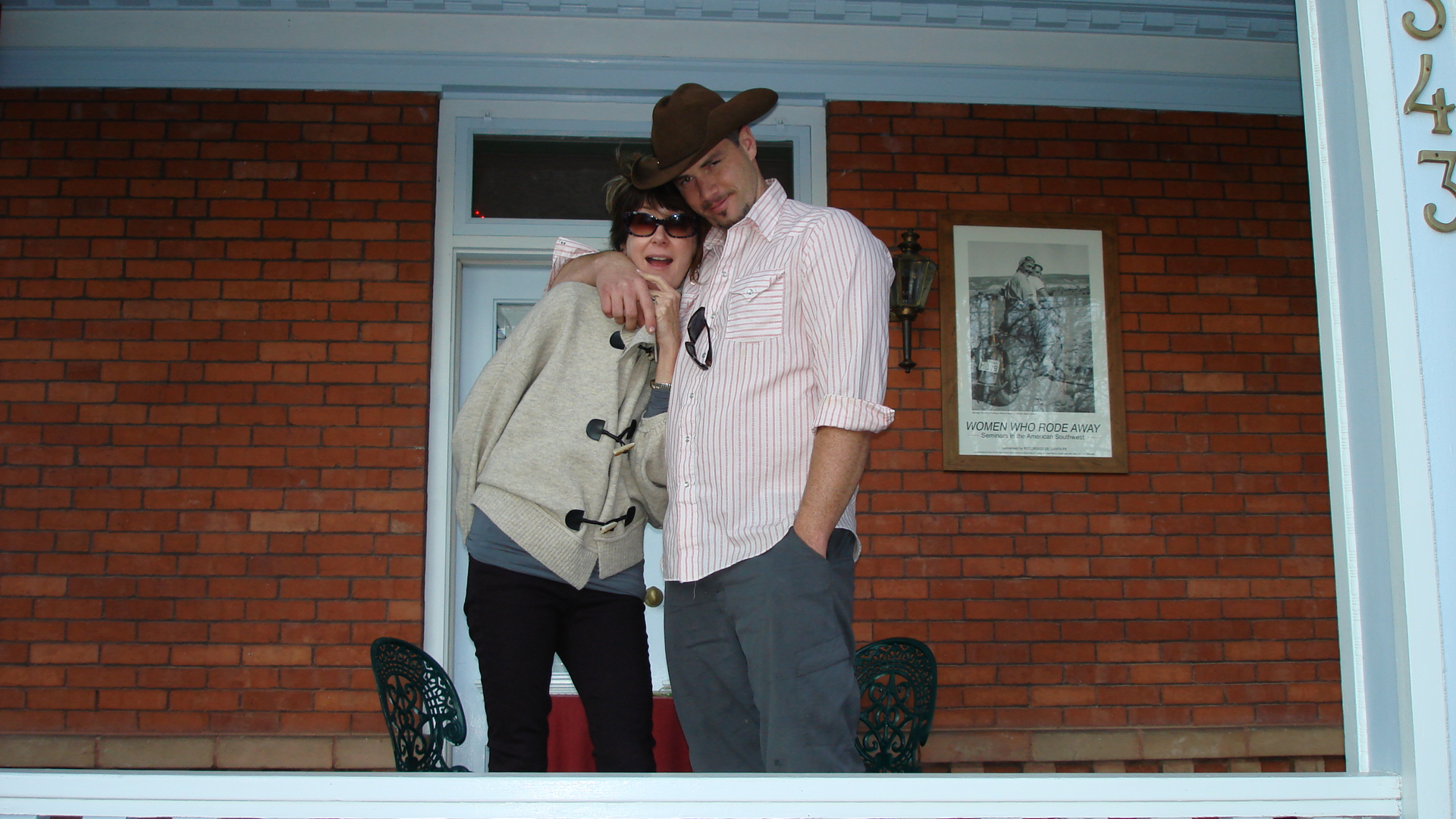
Luellen Smiley is a creative nonfiction writer, author, columnist, and historian whose writing is deeply rooted in a controversial personal history. She is the daughter of Allen Smiley, a close friend, associate, and business partner of notorious Las Vegas gangster Benjamin “Bugsy” Siegel. Her father was sitting only feet from Siegel when Siegel was murdered in Beverly Hills on June 20, 1947.
That extraordinary childhood history became the foundation for Smiley’s first book, Cradle of Crime: A Daughter’s Tribute, published in 2017. The memoir explores what it was like to grow up as the daughter of a man connected to organized crime while trying to reconcile her love for her father with the secrecy, fear, and criminal world surrounding him.
Smiley’s work has appeared in publications including the New York Post, MORE Magazine, Southern California newspapers, and Authorlink. She wrote the newspaper column Smiley’s Dice—Adventures in Livingness, which earned a Blue-Ribbon Award from the California Newspapers Association for her Growing Up With Gangsters columns.
Her interest in her father’s history also led her to become a researcher and commentator on organized crime history. She has participated in television, radio, and documentary interviews.
Smiley’s next book, Gaslighting Greta, will be published this year. A personal story that reads like fiction. Her own website describes the project as exploring a woman whose life is destabilized by gaslighting and psychological manipulation.
Her writing career reflects a recurring theme: using personal experience and research to uncover the truth behind complicated relationships and extraordinary lives. From the secretive world surrounding her father and Bugsy Siegel to the deeply personal territory of Gaslighting Greta, Smiley’s work transforms difficult experiences into stories of survival, discovery, and ultimately reclaiming one’s voice.
Luellen Smiley is an author whose life has given her an unusual perspective on secrecy, manipulation, family loyalty, betrayal, and survival—and she uses that perspective as the raw material for her nonfiction storytelling.
It is the Kentucky Derby and Cinco De Mayo weekend at La Posada. Kristen from the hotel said I should go; it would be fun. She’s a feisty young woman with clear, penetrating blue eyes and silky brown hair. Youth dances in her expressions; other times, it wilts from being locked down to an indoor job. She’s an adventurer who camps out in Belize and South America. Now, she’s talking about Antigua.
I walked out to the courtyard to see what was going on. The tables weren’t set up yet, but the Donkey stood idly and annoyed at the other end of the yard. I don’t know why they bring him, maybe for the kids. In the bar, a few guests were watching the Derby. The elan of race anticipation is shining like a light. I ordered a Mint Julep, and the guys were all watching as Dude whipped it up with finesse.
“ How is it?” Dude asked without needing any approval.
“ Magical. Who are you betting on? Greta asked.
“I want a Titty Tut, something nasty.”
“ Oh, stop that. You do it too much.” She replied.
“ Not nearly enough! Okay, here’s my horse—Promises Fulfilled. Oh yes, that’s mine.”
“ Everything you say is a metaphor for sex.”
“ You bet it is.” Who’s your pick?”
“ My prick is Justify.”
“Hah, see, now you get it.”
I sipped my drink and wandered around the lobby, stopping to greet Jackie, Monserrat, and Danielle. They don’t know what their smiles and caring comments do for me. I must tell them more often.
“ I don’t know what I’d do without all of you.”To be continued.
I’ve written in the genre of Creative Nonfiction, integrating the events through dialogue, journal entries, and a third-person narrative. Within three locations, Santa Fe, New Mexico, Los Angeles, California, and Saratoga Springs, NY. Greta (me) exposes the mutilation gaslighting abuse inflicts on her emotions, psychology, mental and physical health, and her finances.
Adventures in livingness aren’t just about extroversion, what we say, how we behave, or how we respond. More importantly, they are about our inner changes when life demands that from us. No one hears what threads are spoken in our heads, the ones that are flawed from indecisiveness, the ones that have been molded from things long past, the new threads that are unfamiliar, and the ones we need to rip out entirely.
I’ve written in the genre of Creative Nonfiction, integrating the events through dialogue, journal entries, and a third-person narrative. Within three locations, Santa Fe, New Mexico, Los Angeles, California, and Saratoga Springs, NY. Greta (me) exposes the mutilation gaslighting abuse inflicts on her emotions, psychology, mental and physical health, and her finances.
By MARTIN ZEILIG On the evening of June 20, 1947, less than six months after he opened the Flamingo Hotel-Casino in Las Vegas, Ben “Bugsy” Siegel died in a barrage of bullets through the front windows while sitting on a couch in his Beverly Hills mansion at 810 Linden Drive. Assassinated at the age of 41, Siegel was one of the USA’s most notorious gangsters. A former Winnipegger, Al Smiley (1907-1984) was with Siegel that evening. “My dad was seated inches away from Siegel, on the sofa, and took three bullets through the sleeve of his jacket,” said Luellen Smiley, a creative non-fiction writer, award-winning newspaper columnist, and Mob historian who lives in Sante Fe, New Mexico. She consented to an interview with The Jewish Post & News earlier this winter. “He was brought in as a suspect. His photograph was in all the newspapers,” said Luellen. “He was the only nonfamily member who had the guts to go to the funeral.” So who was Al Smiley? Born in Kiev, Ukraine in 1907 as Aaron Smehoff, Smiley and his family – father Hyman, mother Anne, sister Gertrude (who became a school teacher and lived in Winnipeg until her death many decades later), brothers Samuel and Benjamin – immigrated to Winnipeg when he was five, said Luellen Smiley, during a recent telephone interview with this reporter from her home in Sante Fe, New Mexico. “My grandfather was a kosher butcher and delicatessen owner,” she continued, noting that the family home and butcher shop was located at 347 Aberdeen Avenue. “He maintained an Orthodox household and expected that his eldest son would become a rabbi. But, my father was rebellious and interested in sports, especially hockey.” This caused conflict between the willful youth and his rigid, religious father. So, the teenager fled Winnipeg for greener pastures in Detroit, Michigan via Windsor, Ontario in 1923. He got a job travelling with the Ringling Brothers Circus and ended up in California where he was arrested for a drugstore robbery in San Francisco and sent to Preston Reformatory School in Ione, California, Luellen noted. “It was there that he met legendary movie director Cecil B. DeMille,” she said. “He was doing some sort of research for a movie. My father asked him for a job in the movie industry upon his release, and DeMille agreed. He found my dad work in a wardrobe department. He later became a property man, then a grip, the person in charge of production on a set, and eventually a producer.” He befriended celebrities like George Raft, Eddie Cantor, Clark Gable, Lauren Bacall, along with such gangster associates as Ben Siegel. “I’m pretty sure Dad met Ben through George Raft,” Luellen Smiley speculated. With Siegel’s help he opened a nightclub in L.A. sometime in the late 1930s. Smiley would later tell his daughter that Siegel was “the best friend I ever had.” In her soon-to-published memoir, excerpts of which she agreed to let this newspaper print, Luellen Smiley reveals the conflicted feelings she had growing up, and into later life too, about her father: “Some children are silenced. The pretense is protection against people and events more powerful than them. As the daughter of Allen Smiley, associate and friend to Benjamin ‘Bugsy’ Siegel, I was raised in a family of secrets. “My father is not a household name like Siegel, partly because he wore a disguise, a veneer of respectability that fooled most. It did not fool the government. “When I was exposed to the truth by way of a book, I kept the secret, too. I was 13. My parents divorced, and five years later, my mother died. In 1966, I went to live with my father in Hollywood. I was forbidden to talk about our life: ‘Don’t discuss our family business with anyone, and listen very carefully to what I say from now on!’ But one night, he asked me to come into his room and he told me the story of the night Ben was murdered. “When I was spared death, I made a vow to do everything in my power to reform, so that I could one day marry your mother. “Ben was the best friend I ever had. You’re going to hear a lot of things about him in your life. Just remember what I am telling you; he’d take a bullet for a friend. “After my father died, I remained silent, to avoid shame, embarrassment and questions. But 10 years later, in 1994, when I turned 40, I cracked the silence. I read every book in print – and out of print – about the Mafia. Allen Smiley was in dozens. He was a Russian Jew, a criminal, Bugsy’s right-hand man, a dope peddler, pimp, a racetrack tout. I held close the memory of a benevolent father, wise counselor, and a man who worshipped me. “I made a Freedom of Information Act request and obtained his government files. The Immigration and Naturalization Service claimed he was one of the most dangerous criminals in the country. They said he was Benjamin Siegel’s assistant. They said he was poised to take over the rackets in Los Angeles. He didn’t; he sold out his interest in the Flamingo, and he went to Houston to strike oil. I put the file away, and looked into the window of truth. How much more could I bear to hear? “He stowed away to America at 16, and was eventually doggedly pursued for never having registered as an alien. He had multiple arrests – including one for bookmaking in 1944, and another for slicing off part of the actor John Hall’s nose in a fracas at Tommy Dorsey’s apartment. He met my mother, Lucille Casey, at the Copacabana nightclub in 1943. She was onstage, dancing for $75 a week, and my father was in the audience, seated with Copa owner and mob boss Frank Costello. “‘I took one look, and I knew it was her,’ was all he had told me on many occasions. “On a trip to the Museum of Motion Pictures Arts and Sciences in Los Angeles, I was handed a large perfectly pristine manila envelope, and a pair of latex gloves with which to handle the file. Inside were black and white glossy MGM studio photographs, press releases, and biographies of my mother’s career in film, including roles in ‘The Secret Life of Walter Mitty,’ ‘Ziegfeld Follies of 1946,’ ‘Meet Me in St. Louis’ and ‘Harvey Girls.’ She was written up in the columns, where later my father was identified as a ‘sportsman.’ The woman who pressed my clothes, washed my hair, and made my tuna sandwiches was an actress dancing in Judy Garland musicals, while her own life was draped with film noir drama. “My father wooed her, and after an MGM producer gave her an audition, he helped arrange for her and her family to move to Beverly Hills, where she had steady film work for five years. He was busy helping Siegel expand the Western Front of the Costello crime family and opening the Flamingo casino in Las Vegas. They were engaged in 1946. “Still, the blank pages of my mother’s life did not begin to fill in until I met R.J. Gray. He found me through my newspaper column, ‘Smiley’s Dice.’ “One day last year, R.J. sent me a book, ‘Images of America: The Copacabana,’ by Kristin Baggelaar. There was my mother, captioned a ‘Copa-beauty.’ Kristin organized a Copa reunion in New York last September. I went in place of my mother, but all day I felt as if she was seated next to me. I fell asleep that night staring out the hotel window, feeling a part of Manhattan history. “Now, the silence is over. I don’t hesitate to answer questions about my family. I have photographs of Ben Siegel in my home in Santa Fe, NM, just as my father did. Every few months I get e-mails from distant friends, or people who knew my dad. “It seems there is no end to the stories surrounding Ben and Al. I am not looking for closure. I’ve become too attached to the story. To me, he was a benevolent father, a wise counselor, and a man who worshipped me.” Luellen Smiley can be contacted via email: folliesls@aol.com
I’ve written in the genre of Creative Nonfiction, integrating the events through dialogue, journal entries, and a third-person narrative. Within three locations, Santa Fe, New Mexico, Los Angeles, California, and Saratoga Springs, NY. Greta (me) exposes the mutilation gaslighting abuse inflicts on her emotions, psychology, mental and physical health, and her finances.
WW11 SURVIVOR’S VOW TO GOD
OLYMPUS DIGITAL CAMERA
Part Two. Solana Beach Morrocan Bungalow 2003.Maurice was 84
Maurice married the love of his life on December 25, 1941. They married in December because Maurice had saved one thousand dollars and made one hundred dollars a month. Agnes, his girlfriend in Grant, Iowa, is the woman who led Maurice out to Rancho Santa Fe, California, from his home in Grant. She and her father worked for Ronald McDonald, a prestigious resident in the ranch. She was responsible for housekeeping and cooking, and her father was the chauffeur.
Agnes and Maurice went to the US Grant Hotel for dinner and stayed at the Paris Inn on Kettner Avenue in San Diego. The following day Agnes went off to work. Maurice stayed in the little guest house she occupied on the McDonald property. Two days later Maurice received his draft notice. On December 31, he left his new bride and reported for duty in Escondido. He had one short visit before he left for overseas. Then, the next time he would see her, he would be changed.
Buna
One summer evening, I was sitting on Maurice’s front porch. Sometimes, we would sit out till after eight o’clock at night talking about different parts of Maurice’s life. Maurice is really busy in the summer; he tends to his garden of fruits and vegetables, he delivers furniture for all the Cedros merchants, and he helps his friends. He never seems tired, he likes to sit on the porch, have a beer, and tell stories. I used to like it when my father told me stories, but they were unlike Maurice’s. There didn’t seem to be anything he
couldn’t talk about. Once he said, ” You can ask me anything you want.”
“Maurice, how old were you when you were drafted?”
“Well, I was thirty-one years old in 1941 when the war broke out. I had to leave my wife, which bothered me, but I wanted to go overseas and fight for my country. There were so many nice soldiers, the best people in the world. I recall two boys from Chicago that were only eighteen years old, they lied to get in the service, and they were the best soldiers you ever saw- they weren’t afraid of anything.”
“Where did they send you after you left San Diego?”
“Well, first, I went to Camp Roberts for thirteen weeks of training, but I got out in nine weeks. Then they sent me to Fort Ord to get my gear, rifles, and clothes. We left San Francisco on April 21, 1942. We got into Adelaide, Australia, after twenty-one days at sea.” Maurice paused like he had to catch his breath. I watched his face, thinking he may want to stop.
“You remember so much… Do you mind talking about it?” I asked.
“No, I don’t mind; it changed my life, everything about it.”
“Where did they send you after that?”
“We trained for a while in Adelaide; the people in Australia were so happy to see us. I remember they met us at the beach with tea and cookies. The enemy soldiers were getting close. We went up the coast to New Guinea and into Port Moresby; we got there on Thanksgiving Day 1942. As soon as we got off the ship, the bombs hit us; it was the hundredth raid that night. The next morning we were supposed to get to the Stanley
Mountain range, we were in such a hurry. The Japanese soldiers built cement pillboxes and the army wanted us there. So we got in this plane, and they flew us there. Twenty-one at a time. When I got to the island of Buna, there were dead soldiers scattered all over the beach. We lost men so fast. Then, on Christmas Day of 1942, General McArthur ordered us to advance, regardless of the cost of lives. My division was one of the first to stop the Japanese army, the 32nd Division. After we were immobilized and a lot of our men killed, they sent in the 41st Division to take over.”
Maurice’s memory was like listening to a documentary, and this was the first time a Veteran confided in me. They didn’t get supplies at first; they had to wait till everything was shipped to Europe. They got what was left over, which wasn’t much. He ate cocoanut bark for two weeks and had no water.
“I can remember so well the first Japanese soldier I saw. He was sneaking through the jungle, only thirty feet off. I don’t know if I shot him, but he dropped. I don’t like to think I killed anyone, and it bothers me to this day that I had to kill. The Japanese were good soldiers; they had better ammunition than us. We fought all day, and we always ran out of ammunition before they did. I’ll never forget Christmas Day of 1942. We went into a trench to get ahead; the fellow ahead of me was cut wide open, and the guy behind was shot. I just lay there on the ground. If you moved you’d be shot. It was so bad; I lay there all day and night. ”
“Did you think you were going to die?”
“I didn’t let myself think that. I promised God that if I ever got out alive I’d never complain about anything in my life again. Nothing… nothing could be worse than that day.”
“You kept the promise, didn’t you?” I asked.
“Yes, I have.”
“And that’s why the war changed your life?” I said.
“That’s right. Every day is a beautiful day after you’ve lived through war, at least for me,” he said.
Excerpt from manuscript. All rights reserved. No part of this work covered by the copyright herein may be reproduced without the author’s prior written permission.
I’ve written in the genre of Creative Nonfiction, integrating the events through dialogue, journal entries, and a third-person narrative. Within three locations, Santa Fe, New Mexico, Los Angeles, California, and Saratoga Springs, NY. Greta (me) exposes the mutilation gaslighting abuse inflicts on her emotions, psychology, mental and physical health, and her finances.
HOW ONE SOLDIER CHANGED THE COMMUNITY OF SOLANA BEACH, CA
For many of us, the idea of aging is frightening. We have been led to believe it brings pain, loneliness, and idle time for regressing mentally. Remedies, products, prescriptions, and escapes offer youthful looks, energy, and vitality. The thought of aging is brutal; we pretend we can buy youth. What if you met a man who told you he could do everything today, at eighty-four, that he did all his life without injections, medicine, special diet, or specific training?
What if I told you all his family, including his brothers, mother, and father, is gone? His wife died twenty years ago. That he lives alone and is not lonely. He claims he is the happiest man in the world. Would you want to meet him? He wants to meet you. He would like to be everyone’s neighbor. He has much to teach in a country of strangers about meeting neighbors and making friends. We who know proclaim him an inspiration, a legend, an angel. And to that, he always replies, “I‘m just a regular guy.”
Maurice Roberts has lived in Solana Beach since 1936, and his recollections of the area are intact. I recorded his history and began writing everything down. Next week, I will startthe first in a series of historical perspectives.
I’ve written in the genre of Creative Nonfiction, integrating the events through dialogue, journal entries, and a third-person narrative. Within three locations, Santa Fe, New Mexico, Los Angeles, California, and Saratoga Springs, NY. Greta (me) exposes the mutilation gaslighting abuse inflicts on her emotions, psychology, mental and physical health, and her finances.
Subscribe to continue reading
Subscribe to get access to the rest of this post and other subscriber-only content.
I’ve written in the genre of Creative Nonfiction, integrating the events through dialogue, journal entries, and a third-person narrative. Within three locations, Santa Fe, New Mexico, Los Angeles, California, and Saratoga Springs, NY. Greta (me) exposes the mutilation gaslighting abuse inflicts on her emotions, psychology, mental and physical health, and her finances.
“I respond to intensity, but I also like reflection to follow action, for then understanding is born, and understanding prepares me for the next act.”
JANUARY
SNOW, ARTIC BLAST, ICE, FREEZING. Maelstrom of inconveniences toppling down in every nook and cranny of body, home, and outdoors. I wore a long-sleeved liner, wool sweater dress, rabbit poncho, and over that, a wool wrap, laptop mittens, sherpa leggings, wool socks, and boots. Mornings, eight degrees, afternoons eighteen, and the absence of sunlight grids my spirit. Repetitive lessons in endurance, tolerance, and acceptance. The outer world stenches corruption, propaganda, cruelty, violence, and haranguing reporters. The election year dominates the bunkum reporting.
It’s been almost a month since I texted or called Dodger. Somedays, I enter the memories, a reel of episodes on our cross-country road trips, hiking barren, narrow, unclaimed paths in Baja, mountains and canyons in New Mexico, and lakes and forests in upstate New York. They appear to be aberrations of myself; I am unrecognizable as he is, too.
FEBRUARY
MATURITY has caught up with me, and I am viscerally aware of this pendulum as replacing the nonacceptance of my lifestyle and future to hardened acceptance, which is a relief. I used to be full of follies, gaiety, and impulse; inner choreography is now critical thinking, studied decisions, and a spoonful of distrust. Instead of unleashing all that I think and feel with strangers, the narrative is split between inching closer to listening rather than personal tete e tet. Once a week, I go outing to the social club, where I find conversant strangers,couples, singles, divorces,and a variety of ages, and yet they all have a commonality that I don’t, they seem genuinely satisfied with their lives, one comment this, after asking the bartender how are you, he smiled, slapped the polished wooden bar with both hands and replied, I couldn’t be happier. Then he opened his phone and showed me a photo of a baby boy. His expression soared through my senses, and I adulated with compliments. Another evening, I opened a conversation with a couple next to me, and for the next hour, I learned of their life; children, travel, cruises, especially, ” Oh, you’ve never been on one? You must go, you’re so perfect for a cruise.
” I’m uncomfortable with more than twenty people.”
“I don’t believe that for a minute.” Wendy was really fit to her name; she wiggled in her seat, her hands never at rest, and her thoughts poured like raindrops. Her husband, Christian, nodded a lot, and when he tried to speak, she ran right over him. A few times, he rolled his eyes at me. They’d been married thirty-five years, looked to be in their early fifties, and semi-retired. I left feeling love, had tipped our kinship, a surprising need to leap from trivialities to more substance.
I’ve written in the genre of Creative Nonfiction, integrating the events through dialogue, journal entries, and a third-person narrative. Within three locations, Santa Fe, New Mexico, Los Angeles, California, and Saratoga Springs, NY. Greta (me) exposes the mutilation gaslighting abuse inflicts on her emotions, psychology, mental and physical health, and her finances.
Greta got into bed early and started watching Feud, a new series about Bette Davis and Joan Crawford, played by Jessica Lang and Susan Sarandon. The film etches overcoming a middle-aged woman’s obstacles in life: men, finances, rejection, and loneliness.
A knocking at the door, ‘Oh no, I don’t want to see anyone.’
“Police, open up.” You couldn’t cut her tension with a semi-truck head-on. She opened the door to five male Policeman and a Medic.
“ Greta we are here because someone is very concerned about your welfare. I understand you made a reference to taking your own life.”
“ Who called you? It was Aaron right?”
“Yes. He said you made a remark that disturbed him and he wanted us to check on you. Did you say you wanted to take your own life?”
“Not in the way he interpreted. I’m not going to commit suicide I just need a break from tortuous gaslighting.”
” Who is gaslighting you?”
” My ex-partner of thirty-five years and his demonic girlfriend.
“How can you resolve this?”
“I don’t know, I’m trapped.” Then I noticed they were not convinced.
“I think you should come with us for an evaluation.”
“No, that’s not necessary, Really, look at me. I’m enjoying a movie. ” Greta got back on the bed in a gesture of defiance.
“We think it is.” We have an ambulance out front.
“What? Oh God. No, I’m not going.”
“You don’t have a choice. It won’t take long, if the Physiatrist thinks you are not in danger they’ll release you.”
“I’m not going in the ambulance.”
“Okay, you can ride with me in the patrol car.”
“Well, let me put on some lipstick. A girl can’t go to the Psychiatric Ward without lipstick.”’ They smiled, and in her pajamas and robe, she slid down into the back seat of the Patrol car avoiding neighbors’ observance.
The ward was a take-off of One Flew Over the Cuckoo’s Nest. One woman was shaking and mumbling herself out of a drug withdrawal, the nurses were telling jokes, one man was in a hospital gown striding up and down the corridor, talking to himself and Greta seated on a chair watched. In the distance, she recognized Lally, a potential renter of her home.
” Lally, can you come over a minute?”
“ How are you? What’s going on?”
“ Oh God, I said the wrong thing to a friend, and he called 911.”
“ I’m sorry to hear that. Are you here for evaluation?”
“Yeah, can you do it?”
“ No, I’m assisting in another department. Don’t worry… I’ll talk to the Physiatrist so you get through quickly. It’ll be fine. Just wait here.”
I thanked him and ten minutes later I was led into a private room with bars on the bed. A nurse took my vitals, then a Doctor asked a few questions like,’ What day is it?’ and then she left without adding anything very comforting. Another knock on the open door and a petite female tiptoed in. She infused sincerity and concern into that bleak sanitary room, and I opened up the story from start to finish. She used expression, voice, and patience to keep me talking. She didn’t inflame the rage against Dodger, she suggested I find counseling and asserted that I was indeed in a very traumatic situation. ‘ I will call the the department supervisor and suggest you be released.’
The six hours Greta was in the hospital centered on the absence of a phone call or email from Dodger. Aaron must have told him to get the address. It’s about two am and Greta is thinking about her birthday; another sort of ménage of meaning, she feels like ten years have passed rather than one. Another doctor came in and released Greta, with a promise to call for counseling. She slipped into a cab in her pajamas and went home. Never had been so terrified of losing control.
The next afternoon brightened when Audrey showed up with roses, champagne, a gift basket, and a happy birthday balloon. She sang the entire birthday song and danced around Greta as she opened the gifts.
“It is a big deal! I always was taught to celebrate friends’ birthdays with everything,” her smile remained and Greta’s surfaced. She told her the story of the previous night and Audrey just sat there, eyes widened like two camera lenses, and told her. “I know you would never commit suicide.‘ She cradled Greta as they walked downtown for dinner. One of her gifts was five hundred dollars. Greta was so stunned she tried to return it, but Audrey blatantly resisted. At our dining table, she waved at guests and waiters with her long arms, “It’s her birthday.” She reminded Greta of her childhood when her father hired magicians and clowns to entertain at her parties. Greta felt sensationally spoiled, and that’s not always an indulgence, sometimes it is the only path to joy. The end of the evening placed her in front of Facebook where friends posted birthday wishes. It was a blessed day and a reminder that she is loved. Aaron was trying to help, and Greta felthis concern with appreciation. There is no replacement to cure your mental doubts than a visit to the Physiatriscat Ward.
Six years later, upright, achieved, and grateful for that day.
I’ve written in the genre of Creative Nonfiction, integrating the events through dialogue, journal entries, and a third-person narrative. Within three locations, Santa Fe, New Mexico, Los Angeles, California, and Saratoga Springs, NY. Greta (me) exposes the mutilation gaslighting abuse inflicts on her emotions, psychology, mental and physical health, and her finances.
Thanksgiving seeps into a day of light and dark, like a trajectory of blissful silence transitioning to watching the Macy’s Parade, then dancing around my bedroom to old-school hip-hop. Internally feeling more adept than last year, the solitude and absence of friends didn’t snake rattle me, it was more like a day of moving effortlessly between desires without contemplation or sorrow. As the year ends, the comparison of achievements and digressions seemed to evoke a visceral epiphany. I’ve always preferred less chaos and crowds to intimate gatherings, and being alone. Looking in the internal mirror, the reflection released a liberation of abasement, it is who I am, and if refusal of this characteristic triumphs, I will never feel self-affirmation.
Without that, life is an interior war.
I snapped this off a film, I cannot recall which one.
I’ve written in the genre of Creative Nonfiction, integrating the events through dialogue, journal entries, and a third-person narrative. Within three locations, Santa Fe, New Mexico, Los Angeles, California, and Saratoga Springs, NY. Greta (me) exposes the mutilation gaslighting abuse inflicts on her emotions, psychology, mental and physical health, and her finances.
The sky is shy today, she wants rain and snow but she hesitates, as the climate is over thirty. But outdoors isn’t of concern these last sixty days. I never felt more Jewish than now, a reclamation of my upbringing, that I was too rebellious to take seriously, now it is a cancerous disease, antisemitism.I asked my friend who grew up in Istanbul in a surrounding of Jewish Armenians. Why do people hate Jews?.
” They are jealous, most Jewish people are educated, and learn at a young age to develop ambition, to make a better life.”
” That’s it? Jealousy?”
” I think so.”
Armen has been the best believer for me in twenty years. If I didn’t have her confidence, I’d have flattened over the last five years. Everyone needs a friend like that, she presses my buttons, sometimes I say stop, then she says I’m sorry, and we go on.
I’ve written in the genre of Creative Nonfiction, integrating the events through dialogue, journal entries, and a third-person narrative. Within three locations, Santa Fe, New Mexico, Los Angeles, California, and Saratoga Springs, NY. Greta (me) exposes the mutilation gaslighting abuse inflicts on her emotions, psychology, mental and physical health, and her finances.
My emotional tail is wagging; curled up in my desk chair. I feel almost as if I was born in this chair. It’s cushioned me through a cyclone of adventures in livingness.
This piece of writing was handwritten on a tablet back in late January. I’ve made some minor additions and deletions. My control over my writing is identical to my control over how I live. Acting on impulse, expanding the mundane into a musical, feasting on all the emotions, and fabricating thorny Walter Mitty encounters. I don’t even think of applying proven methods; I make up new ones.
This plateau of solitude and especially with yourself; with all your flaws. Integrity is more critical; be proud not just for yourself, but because someone out there needs you. Sometimes, solitude feels like a draft, and no matter how many sweaters I put on, the seclusion tugs at my bones. There are not a lot of senior soloists that reside in my village, the majority are family mothers, fathers, and grandparent saints.
If I am drawn into a canvas of what seems my destiny, I draw the opposite silhouette. I am the light against the dark. The green light in my head reminds me that I have some passion for almost everything that God and man created. I just can’t decide which passion to follow. Should I do a museum, gallery, lecture, cruz the country roads, go to a concert, dance at a club, engage strangers in conversation, watch old movies, or read more of the stacks of books on my bedside table. Should I interview the straggly teenagers in the park or hit up the high rollers? Should I write, submit or edit: clean the laundry room, make a fancy dinner, iron my clothes or clean the refrigerator. Living unstructured is a discipline that threads easily some days, and when it doesn’t, I have to control my passion for daydreaming.
I’ve written in the genre of Creative Nonfiction, integrating the events through dialogue, journal entries, and a third-person narrative. Within three locations, Santa Fe, New Mexico, Los Angeles, California, and Saratoga Springs, NY. Greta (me) exposes the mutilation gaslighting abuse inflicts on her emotions, psychology, mental and physical health, and her finances.
I am not afraid to write the truth, to stare and embrace the reflection. It appeared last night; a thought manifested in an abstract way; a torch of light, a rainbow, an open door that symbolized a guide to contentment, and peace of mind, it felt reachable if only I evaporated into the sensibility, allowing change, a complete transformation from this encampment of isolation and fear of making the wrong decision.
I’ve written in the genre of Creative Nonfiction, integrating the events through dialogue, journal entries, and a third-person narrative. Within three locations, Santa Fe, New Mexico, Los Angeles, California, and Saratoga Springs, NY. Greta (me) exposes the mutilation gaslighting abuse inflicts on her emotions, psychology, mental and physical health, and her finances.